
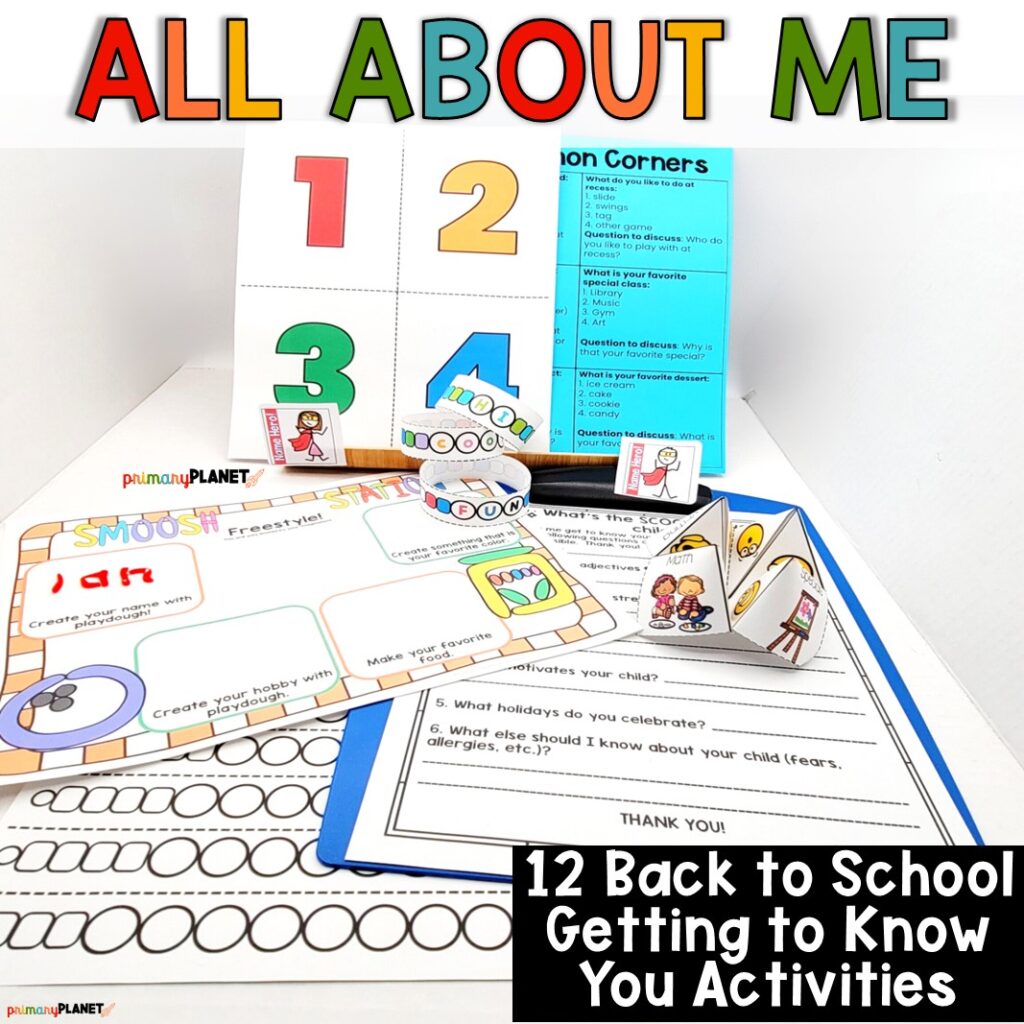

Hey there, teacher friend! I know nothing is ever truly perfect, but these first day activities will help you plan a day that’s practically perfect in every way—and set the tone for a wonderful school year.
The first day is nerve-racking for everyone: teachers, students, and parents alike. One thing we did at our school was hold an open house a few days before school started, so the kiddos already knew how to find their classroom, where their desk was, and so on. It was so helpful.
So whether or not your students have set foot in your room before, these first week of school activities will help you create a smooth start and begin building your classroom community from minute one.

*This post contains Amazon affiliate links. As an Amazon Associate, I earn from qualifying purchases—which just means I may earn a small commission if you buy something through my links, at no extra cost to you. I only share products I genuinely love and think will help you teach happy. Thanks for the support!
First Day Activities: Students Arrive!
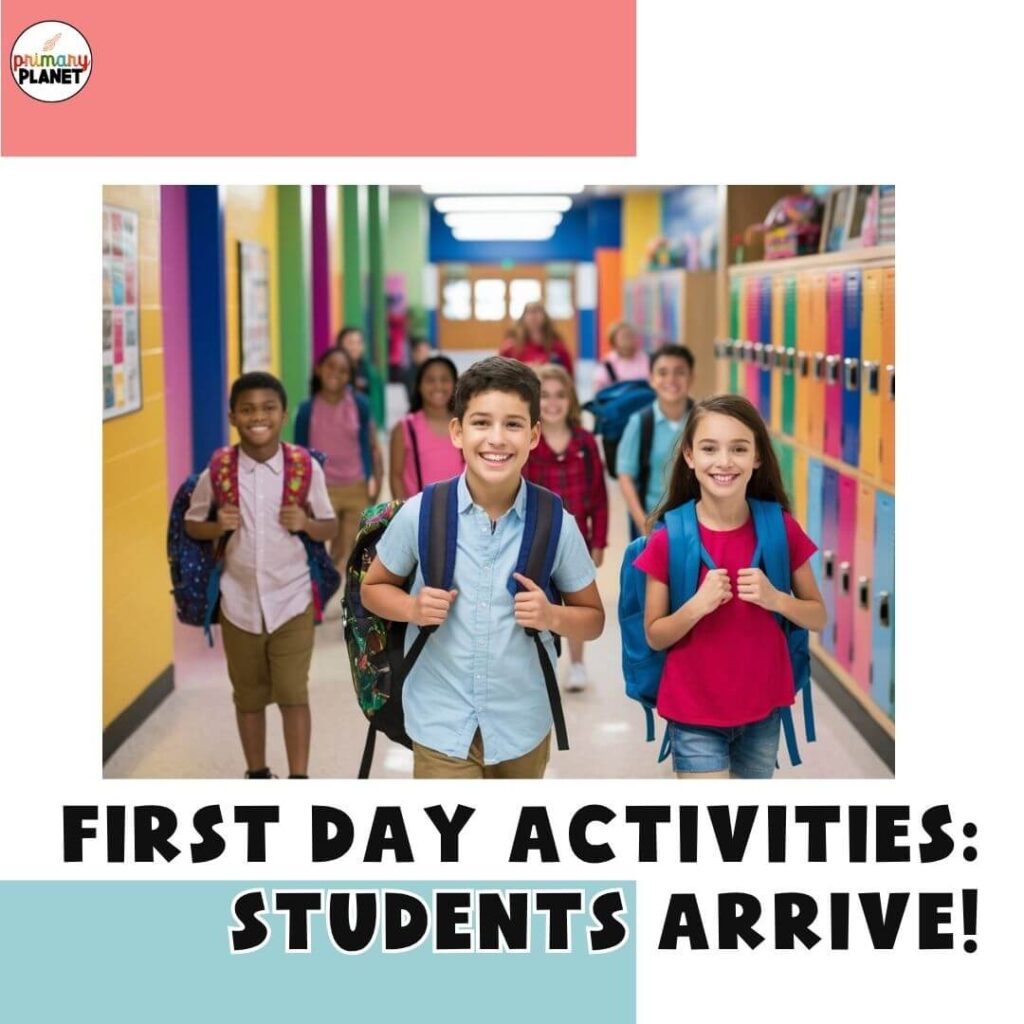
Here they come! Have something waiting on each desk that students can start on while everyone trickles in. Greet them at the door with a smile and a good morning, then point them toward the activity at their seat.
My favorite first-day arrival activity is playdough (Amazon affiliate link)! Set a can on each desk for free play, or use a STEM/STEAM playdough mat that gives kiddos small challenges to tackle. Either way, it gets them talking about what they’re making—and eases those first-day nerves.
While students are busy at their desks, this is the perfect window to:
- Call small groups for a restroom break. Show them where it is, send a few at a time, and remind them to flush and wash up. You’ll teach the full routine later—right now you just want everyone to know where it is and to start the day having gone.
- Get to know your new little cherubs. Walk around, chat, and learn a few names.
- Confirm how each student gets home. Check every child knows their dismissal plan. If someone doesn’t, do a little detective work now so you’re not scrambling at 3:00.
First Day Activities: Start Your Morning Routine
Kick off with a Morning Meeting. I’d play a morning meeting song and tell the kiddos they have until it ends to put their playdough away (so it doesn’t dry out!) and join me on the rug in a circle. They may need help forming that circle the first time.
Briefly walk them through your morning routine, then dive in. For the first few days, I build classroom community with a name challenge:
- Go around the circle—everyone says their name.
- Then you go: point to each student and say their name. If you blank, model asking politely: “Hello, friend! Tell me your name again.”
- Invite volunteers to try. If they get stuck, they ask politely, too.
- If a student names all of their classmates, give them a shout-out sticker! Name Hero. Give students mulitple chances over the course of the first week to earn their sticker!
Then read your Morning Message and a favorite book. (This is a super old post, but still my favorite book.)
The first day is also when I teach bathroom expectations. Decide ahead of time: Are you doing whole-class breaks? What should a student do if they need to go at another time—sign out, or just ask? Practice and review every time you take a break (which will be often that first week!).
First Week of School Activities: Transitions
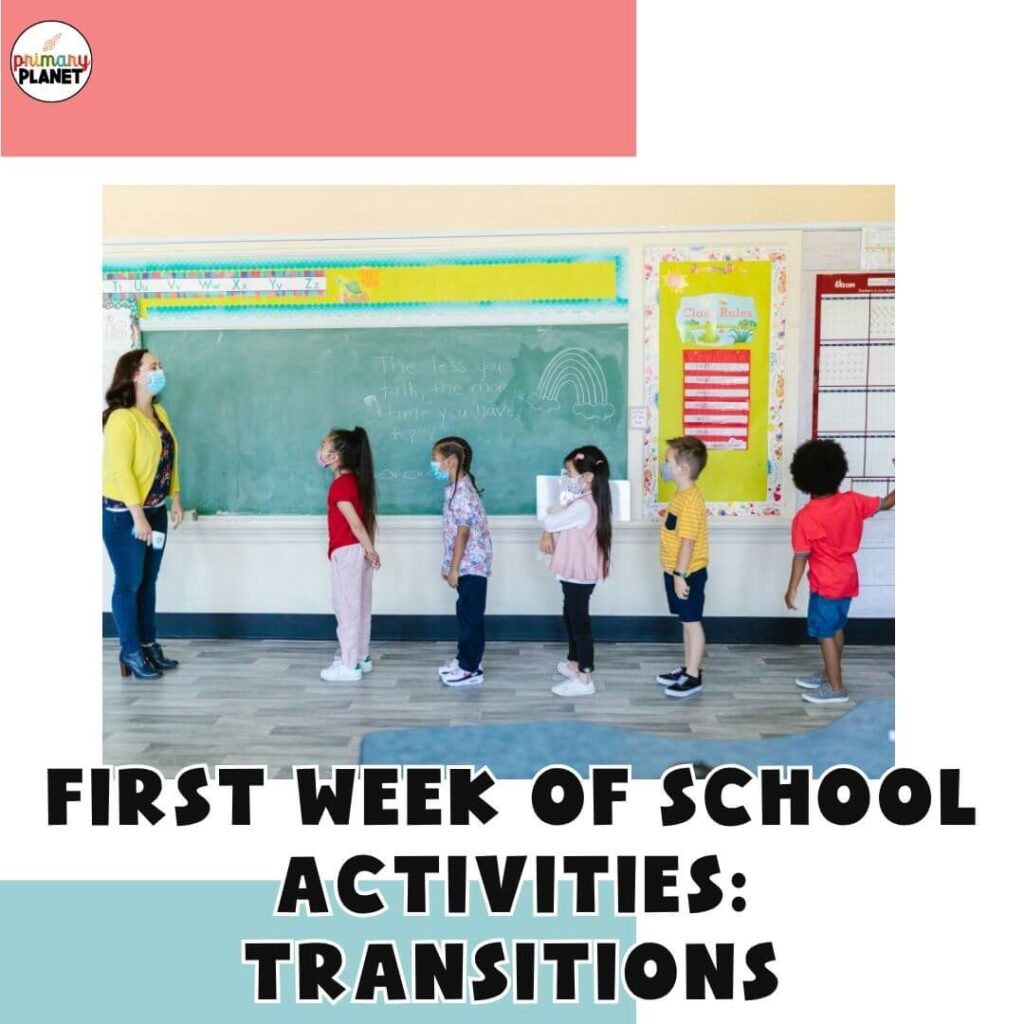
Ugh—transitions are tough stuff for our youngest students. Decide beforehand how you want kids to move from one activity to the next. Will you play a song? Send them back with instructions? Hand them a paper first? Pick your method, then practice, practice, practice.
Show students exactly what you want. Have one volunteer model the wrong way, talk about it, then show the right way. Release a few students at a time and make sure each transition is done correctly.
Lining up: Give each student a number. Every time they line up, they go in number order—no more “He cut!” The one exception: your Star Student gets to be line leader. Help them find their spots, and (you guessed it) practice, practice, practice!
Quiet Signal: You’ll want a quick, consistent way to get your kiddos’ attention and bring the noise down—without raising your voice! Pick one signal, teach it on day one, and practice it just like everything else. A few favorites:
- Call-and-response: You say a phrase, they finish it. “Hocus pocus…” → “Everybody focus!” or “Class, class…” → “Yes, yes!” Kids love these, and you can switch them up to keep it fresh.
- Chime or bell: A soft chime or rain stick is a calm, gentle signal—perfect if you’d rather not add more talking to a noisy room. A know a lot of teachers like to use a digital doorbell like this one on Amazon (yup, affiliate link).
- Call-back clap: You clap a quick rhythm, students clap it back. Easy, no materials needed, and it gets their hands busy.
- Give me five: Raise your hand and have students raise theirs and freeze. As they notice, they signal their neighbors until the whole room is quiet.
- Countdown: “Voices off in five… four… three…” A nice heads-up for transitions when kids need a second to wrap up.
Whichever you choose, the magic is in the consistency—use the same signal every time and practice, practice, practice!
Brain Break!
Your kiddos are probably getting antsy by now, so take a brain break. YouTube has a ton, or play a quick round of “Mrs. Gard Says.” Then practice that transition procedure one more time.
First Day Activities for Learning Blocks
Keep it light today. A visible agenda helps everyone settle into the new routine—and cuts down on the chorus of “When’s lunch? When’s recess? When do we go home?” Here are easy first week of school activities for your learning blocks:
Reading
- Find Someone Who… Students find classmates who fit a prompt: someone who loves to read, someone who rides the bus, etc. A great classroom community builder!
- Read a story. Story time was always my favorite part of the day—pick something super fun!
Math
- Math About Me! Students complete a page in a class book they’ll love all year. Bonus: it builds community as they get to know each other.
- Crayon Glyph. Students color a crayon to complete a glyph—makes a perfect hallway display!
Writing
- First-week journal. Students draw and write about something they liked today. Collect these to show growth at parent conferences later!
- Spelling dictionary. Pass them out and have students write their names on the front. There’s a special page for friends’ names—each day of the first week, add everyone’s name together as a class. Go in number order, and have each student spell their name aloud while you model writing it. Great handwriting practice and a fun way to learn each other’s names.
Social Studies / Science
- This or That. Designate two spots (rug vs. back of the room). Call a prompt—”Waffles or pancakes?”—and students move to their choice, then talk about it. You can swap in movements too: raise your hand for cookies, clap for cake. A super fun way to find classmates with shared tastes!
- Interview a friend. A great way for students to get to know someone new.
You may not get to all of these—procedures eat up a lot of day one—but it’s good to have them ready.
Looking for these activities already done for you? Check this out:
Recommended products
End of the Day
Close the first day with an end-of-day meeting. Use your morning meeting song (or a special end-of-day one) and gather back in that circle. Run the name challenge again, or invite kids to share something they liked. Read a chapter of a read-aloud, give any reminders, and—MAKE SURE THEY KNOW HOW THEY’RE GETTING HOME. I cannot stress this enough!
Then dismiss students into your end-of-day routine: get their mail, grab their things, pack up, and sit at their seats—or whatever combination works for you. If there’s time, practice it a few times, just like you did this morning.
More First Day Activities to Build Classroom Community
Want all of these getting-to-know-you first day activities done for you? My Getting to Know You Activities resource has everything you need to build classroom community from day one—just print and go!
TL;DR
A practically perfect first day comes down to a warm welcome, plenty of classroom community building, and lots of practicing procedures. Keep academics light, make the day predictable with a visible agenda, and triple-check that every child knows how they’re getting home. Then carry these first week of school activities through the rest of your first week to keep the momentum going!
Grab your free routines and procedures checklist in my Free Resource Library when you sign up for The Primary Planet Newsletter!
📌 Pin this image to save all these classroom community builders—and share the happy with a teacher friend who needs it!
Happy Teaching,
Hilary