

Ah, back to school season. It’s coming. It’s inevitable (right up there with death and taxes). But don’t panic. There’s still time. And hey, if you’re reading this after the first bell already rang? No worries. Read on. It’s never too late to get your routines in shape.
Here’s the thing I wish someone had told me before my very first year.
I thought I had it handled. I knew what I wanted to teach and when. I knew how I wanted my kiddos to act. I even had a color chart (ugh, I know, I know). What I didn’t have was a plan for how I was going to teach my students how to be in my classroom.
Let me say that again, because it’s the whole ballgame: if you don’t start teaching your classroom procedures on day one and practice them until they’re automatic, you’ll be teaching them all year long. All. Year. And nobody has time for that.
So before your students show up at your door, here are some things to think about as you get back to school ready.
Ask Yourself These Questions First

Grab a coffee and actually answer these. Out loud or on paper, whatever works:
- What do your students do the second they walk in the door in the morning?
- What do you want your morning routine to look like?
- What rules do you want your students to follow?
- What will you do when a student doesn’t follow the rules? (You need this one before day one, trust me.)
- Where do students put their stuff?
- Where do they turn things in?
None of these are revolutionary. But answering them now saves you a hundred tiny decisions later, when you’re already running on fumes.
Make a Rough Plan before Back to School
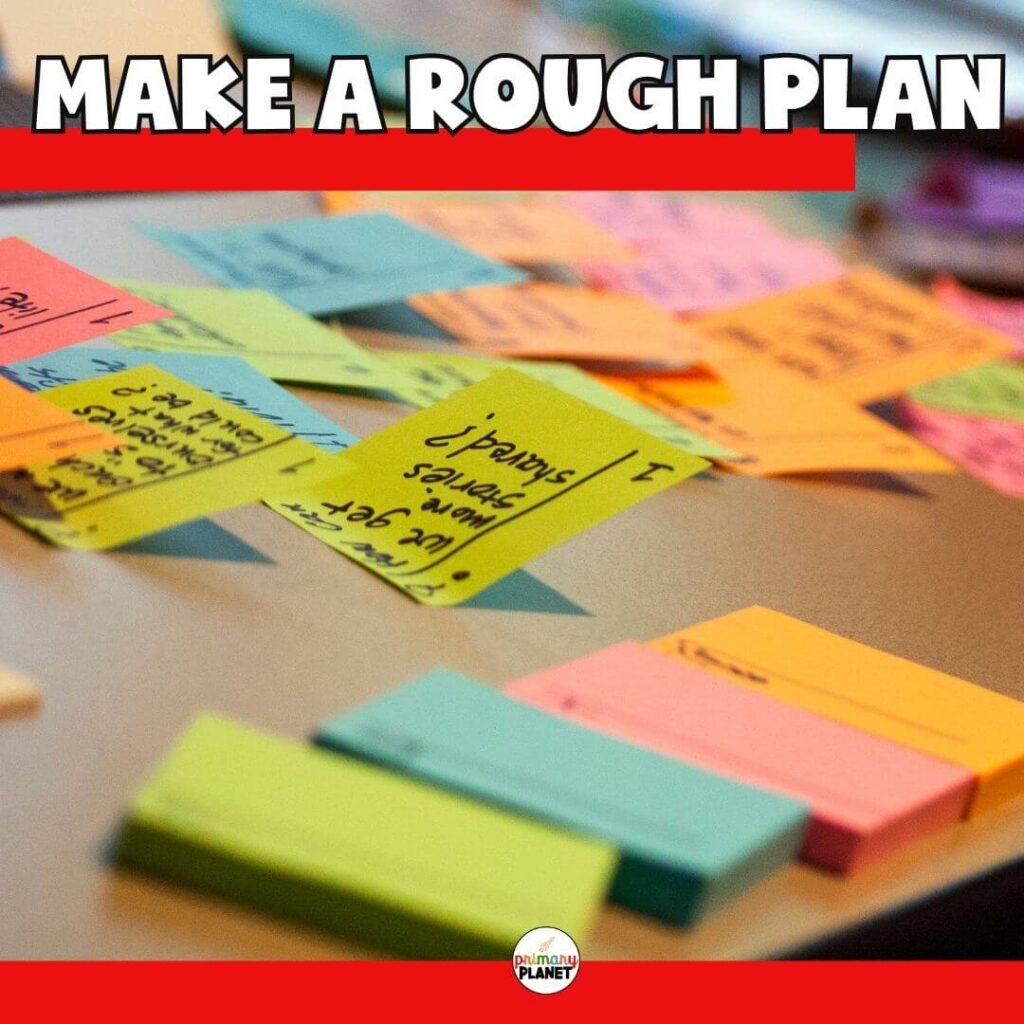
Now make a plan for the first day of school. And I’m not talking about anything academic. First, you teach your students how to do the day. Something like this:
- Arrival
- Morning Business (your morning routine)
- Morning Meeting
- Restroom Break
- Reading
- Going to recess
- Writing
- Going to lunch
- Quiet Time or WIN time
- Math Meeting
- Math
- Going to Specials
- Getting ready to go home
The bolded ones (the ones your kiddos do basically the same way every single day) are the ones to nail down first. Those are your bread and butter.
BEFORE the First Day of School: Write Out Every Single Step
This is the part that feels like a lot. Because it is. But it’s also where the magic happens.
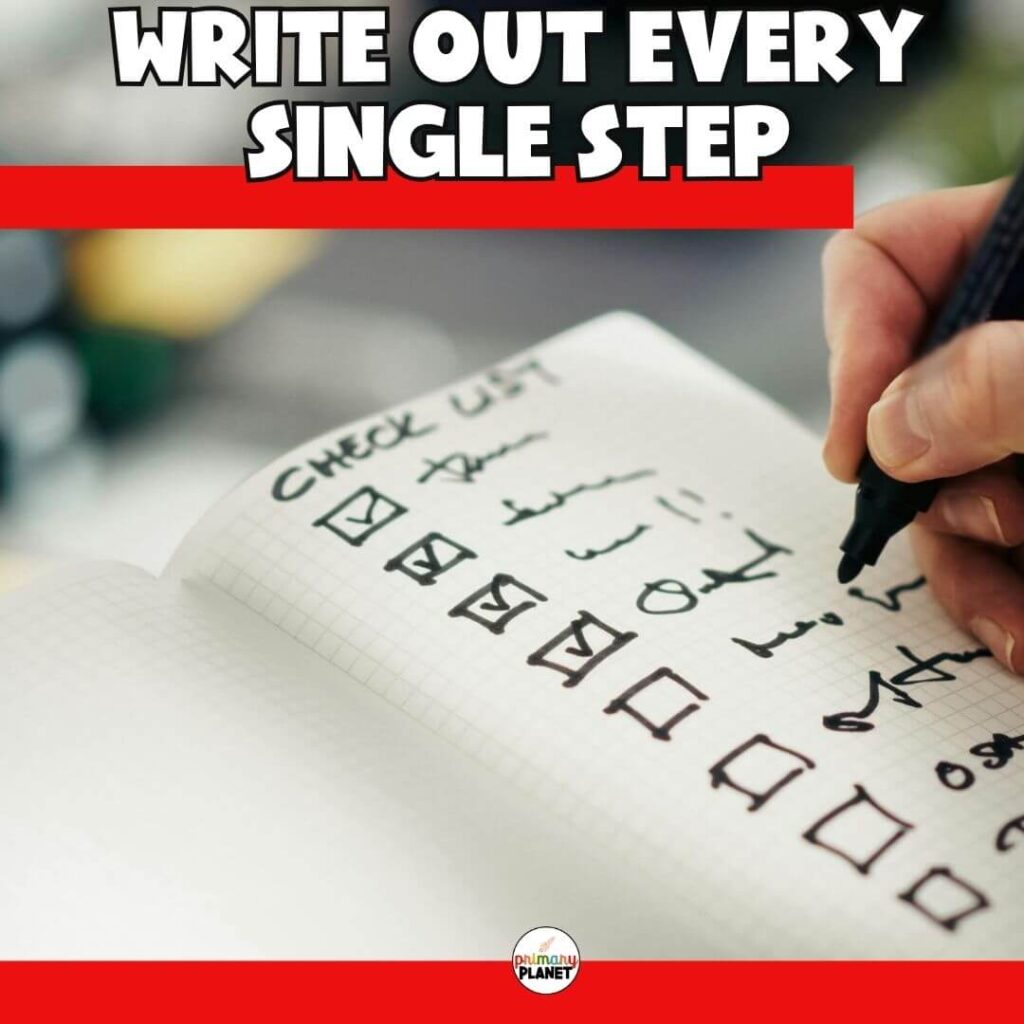
Take one routine and write out every step, in order. Here’s arrival as an example:
- Put your stuff in your locker (cubby, whatever you’ve got).
- Bring your folder into the classroom.
- Turn in any notes or papers. (Have a spot for notes and a separate spot for papers. Two spots. Future you says thanks.)
- Use the bathroom and get a drink or fill your water bottle.
- Make sure you have two sharp pencils. (And, okay, real talk: where are these pencils coming from? Are kids sharpening their own? Do you have a sharpened/dull bin? Have a plan for pencils. Pencils will undo you if you let them.)
- Start your morning work. (Where? At desks? On the rug?)
- What do you do when you finish your morning work?
See how specific that gets? It feels like overkill. It’s not. A five-year-old does not know what “get settled” means. They need step one, step two, step three.
Will your plan be perfect? Nope. Will you tweak it? I sure hope so. You’ve got to do what works for you and your actual students, not some imaginary perfect class. But a concrete plan helps you sidestep so many pitfalls down the road.
Make It Visible
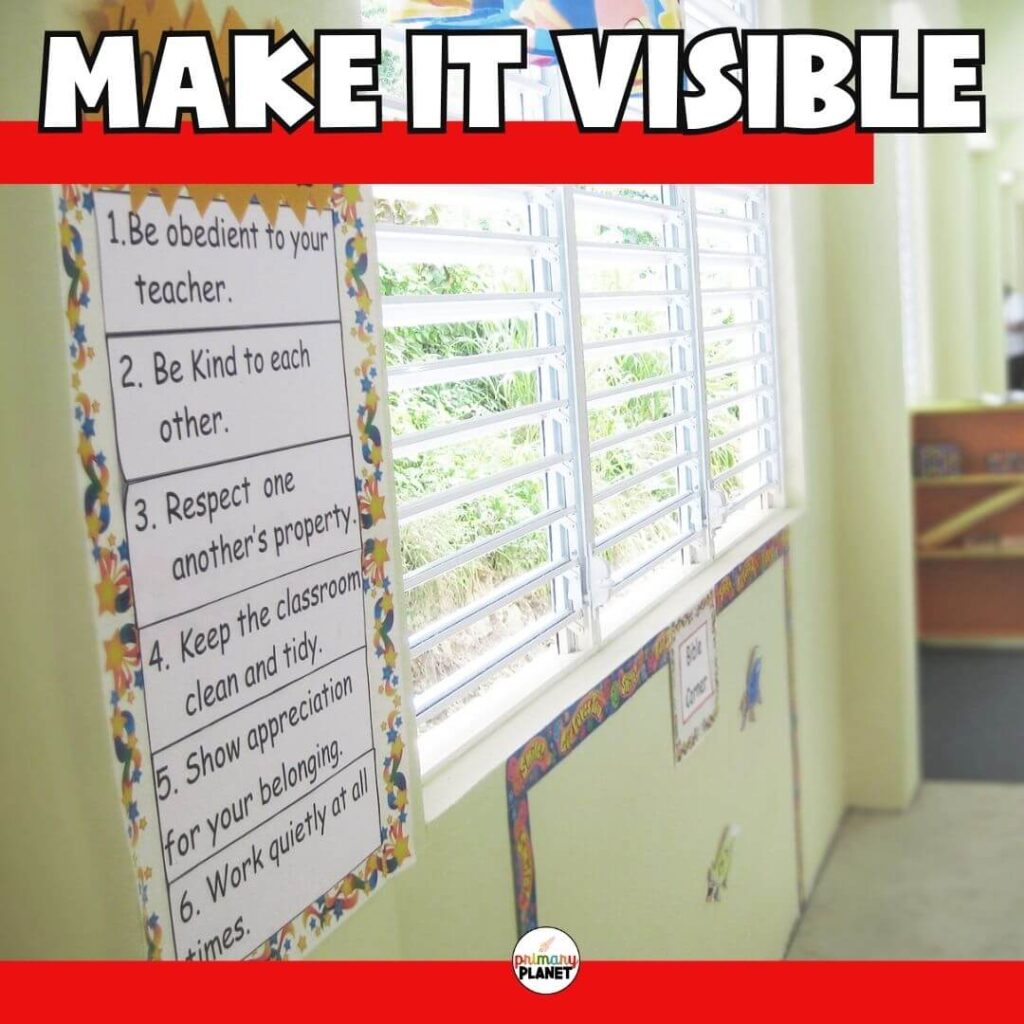
Sometimes kids just need to see it. A poster or anchor chart helps them remember the steps. And honestly? It helps you remember how you wanted things to go, too. (I cannot be the only one who forgets her own system by October.)
A couple ways to go about it:
Do you want your routine written up before the first day, ready to use as a teaching guide and visual aid from minute one?
Or do you want to teach the routine first, then build the visual with your students? That second option is so fun. Snap photos of your kiddos actually doing each step, then add the pictures to the anchor chart. They get a little jolt of ownership when they see themselves up there. Works like a charm.
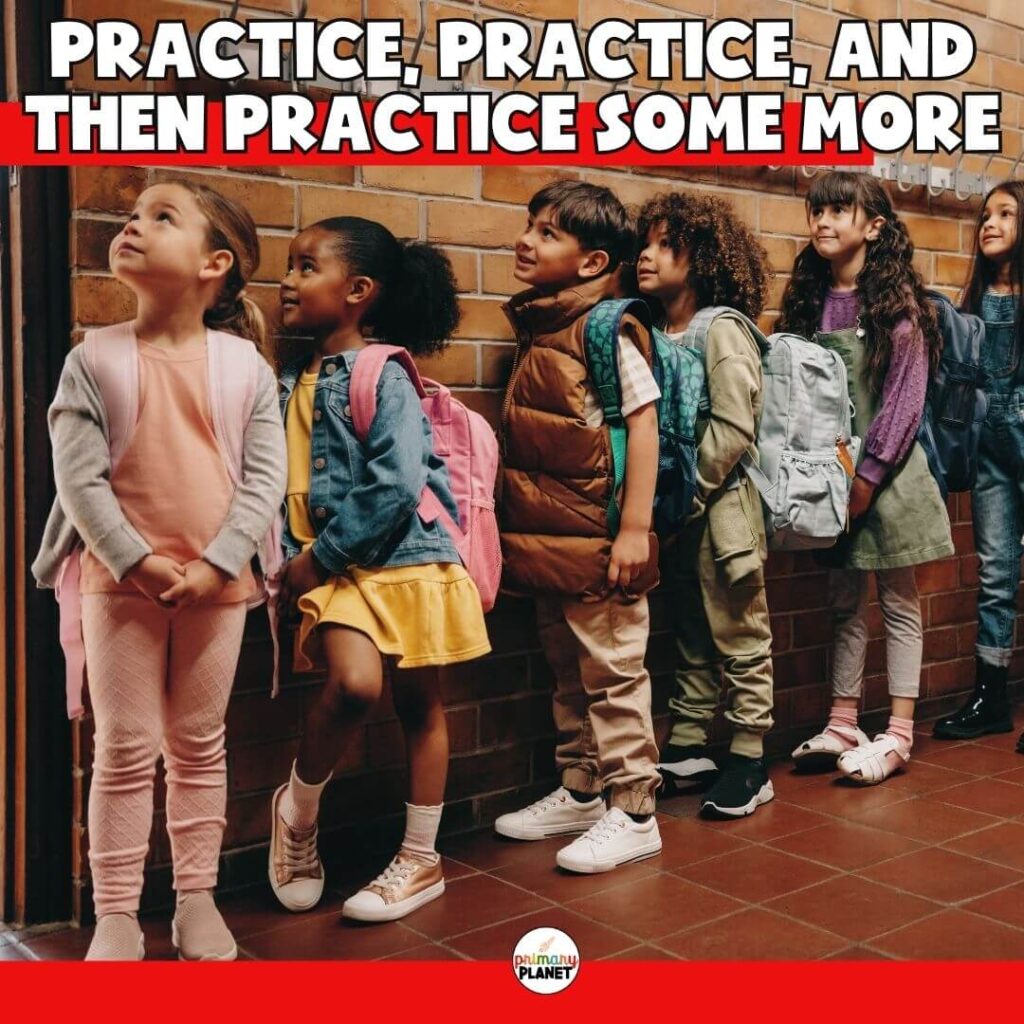
Practice, Practice, and Then Practice Some More
Here’s the part nobody loves but everybody needs:
Practice your routines several times a day, every day, for the first few weeks. Sometimes it takes up to six practice rounds before a routine really sticks. Reference your visual often. The whole goal is independence. You want kids who know what to do without you saying a word, so you can actually get to the teaching part.
It’s slow at the start. It pays off all year.
TL;DR
- Answer the big “what happens when…” questions before day one.
- Map out your daily routines (the non-academic stuff first).
- Write out every step, even the tiny ones.
- Make it visible with a poster or anchor chart.
- Practice like crazy for the first few weeks.
Do this now, and your classroom will basically run itself by November. Well, mostly. It’s still a room full of little humans. But you’ll have a lot more good days than rough ones. That’s the whole goal of a smooth back to school.
Want a head start? Sign up for The Primary Planet teacher newsletter and get access to my free resource library and my free Routines and Procedures Checklist to make sure you don’t forget a single thing.
📌 Pin the image below so you can find this post again when you’re knee-deep in back-to-school planning!
And follow me on TPT! New products are 50% off for the first 24 hours after posting, so you don’t want to miss that. Follow my store here.
Happy Teaching,
Hilary