
I had a student once, in second grade, who could read anything I put in front of him. Fluent, smooth, barely stumbled on a word. And then I’d ask what happened in the story and he’d just look at me. Blank. Like the words had gone in and come right back out without stopping anywhere in the middle.
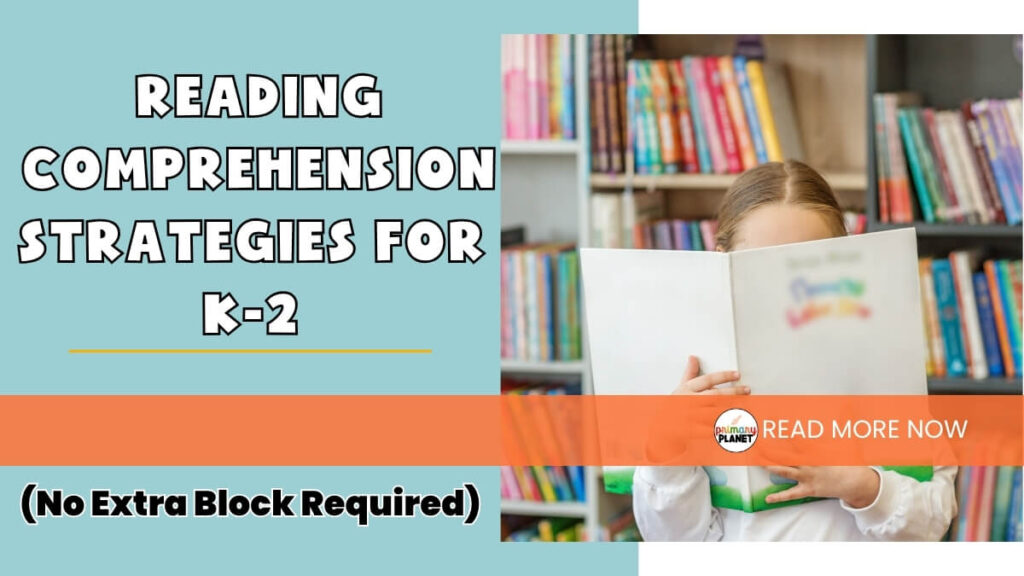
That’s the thing about decoding. It’s not the same as comprehension, and I think a lot of us know that, but it’s easy to forget when so much of the day is already going toward phonics. Rightfully so, honestly, kids need that foundation. But somewhere in there, comprehension can quietly get pushed to the margins. Not on purpose. There’s just only so many minutes.
Here’s the good part, though. Reading comprehension strategies don’t need their own block carved out of your schedule. Most of them can live inside stuff you’re already doing, read aloud, small group, even your fast finisher time if you want to get sneaky about it.
Reading Comprehension Strategies You Can Start Using Tomorrow
These cost you nothing. No prep, no purchase, just a shift in what you’re already doing.
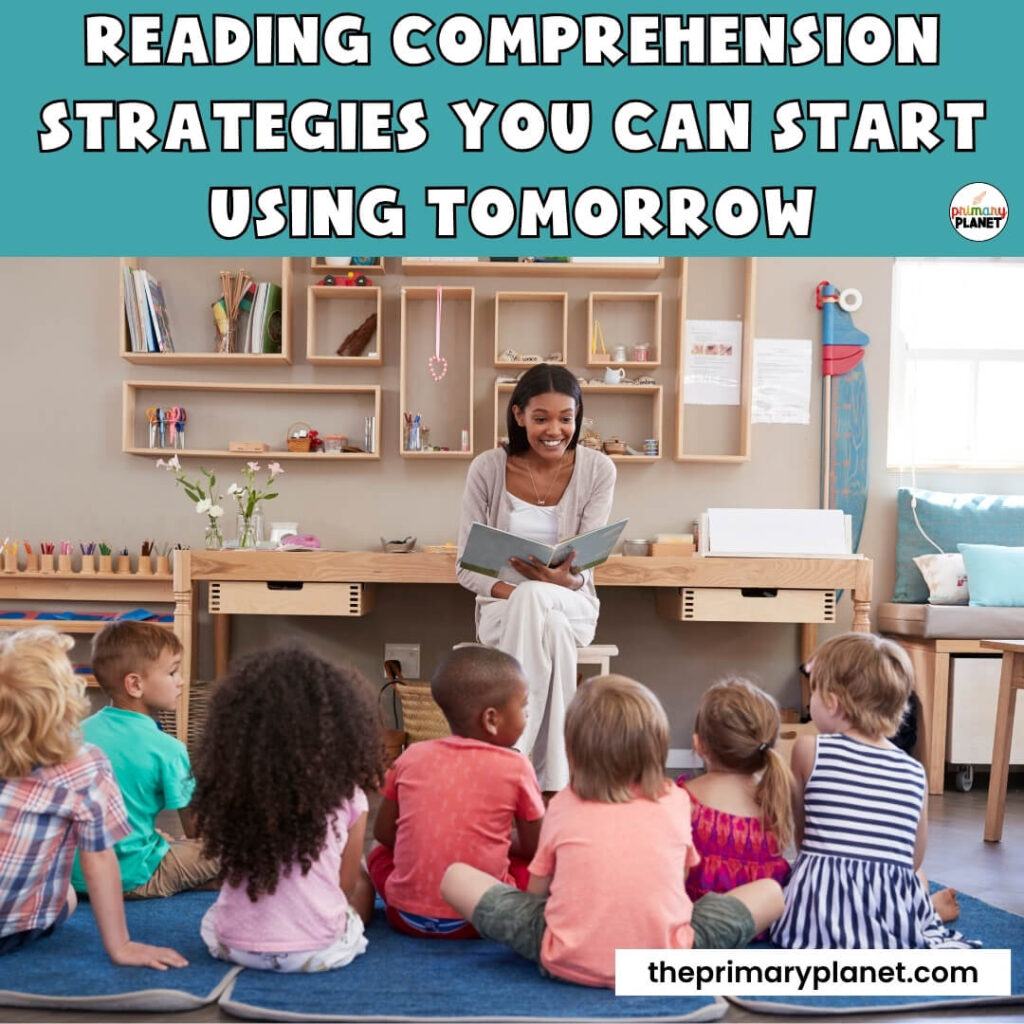
Think out loud while you read to them.
Stop mid-page sometimes and just say what you’re thinking. “Hm, I wonder why he did that.” “Wait, that doesn’t match what I thought was going to happen.” Kids don’t automatically know that good readers have a running commentary happening in their heads. You kind of have to show them it exists first.
Stop and predict, then actually go back to it.
Pause at a natural break, ask what might happen next, and don’t just move on, circle back later and see if they were right. That circling back part is easy to skip, but it’s honestly the part that makes the prediction mean anything.
Turn and talk after a page, not just at the end.
A quick partner retell, thirty seconds, nothing fancy. Gets kids actually putting the story into their own words instead of just sitting there absorbing it, or half absorbing it, more accurately.
Ask “how do you know” instead of “what happened.”
This one’s small but it changes everything. “What happened” gets you recall. “How do you know” gets you reasoning, and reasoning is where comprehension actually lives.
Reread the same short text, but for a different reason each time.
Once for the story. Once to notice something specific, a character’s feelings, maybe, or a detail you missed the first time. It feels repetitive, and I guess it kind of is, but that’s sort of the point.
Make Comprehension Strategies Stick with Reading Goal Bookmarks
Okay, so once you’ve modeled these strategies a handful of times, kids need somewhere to practice them on their own, during independent reading, small group conferences, wherever. That’s where my Reading Comprehension Strategies and Goal Setting Bookmarks come in.
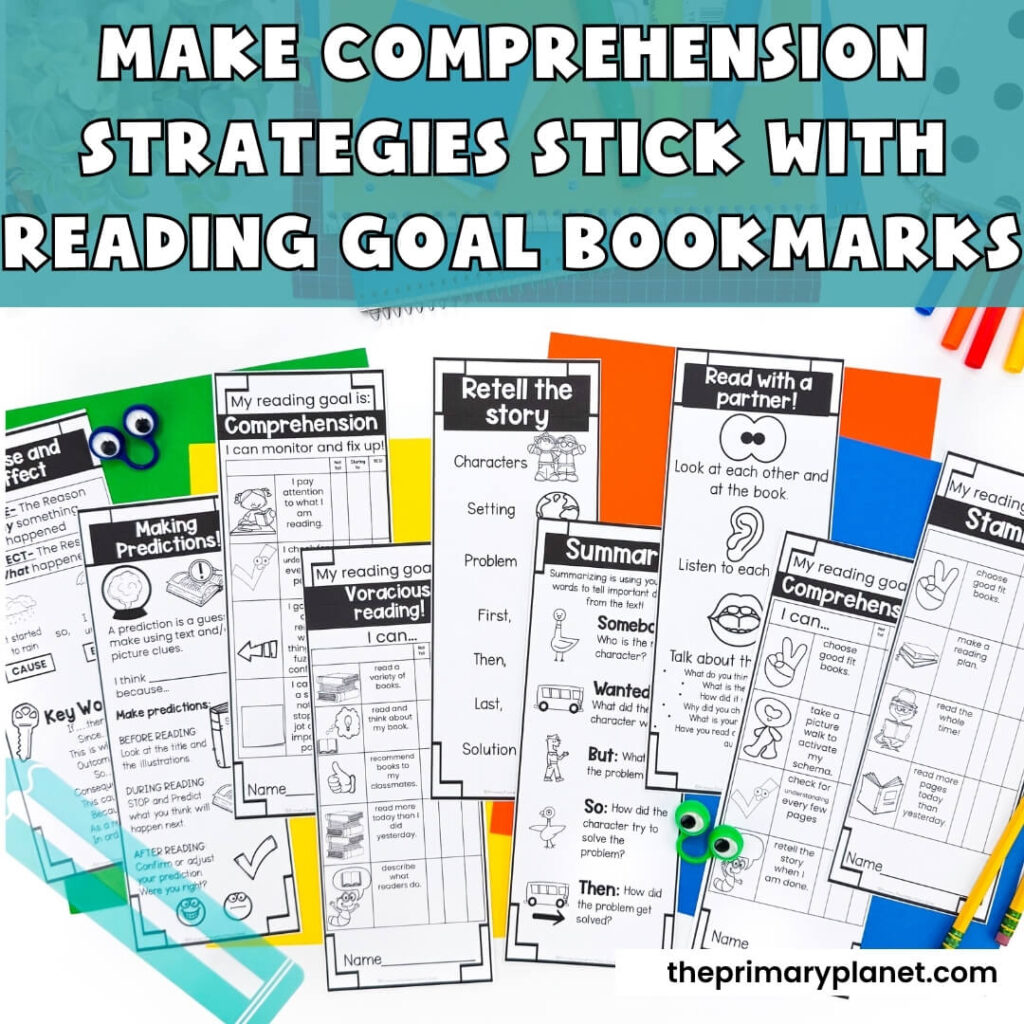
Each bookmark covers a specific strategy, predictions, inferences, monitor and fix-up, cause and effect, that kind of thing, with a little checklist and a mini anchor chart on the back so kids aren’t relying on their memory of a lesson from three weeks ago. I like using them during reading conferences especially. A kid picks a goal, works on it for a stretch, and actually has something to point back to instead of comprehension just being this vague thing we’re all hoping is happening.
They’re not meant to replace the modeling piece. They’re more for after, for the part where a kid needs to keep practicing something you already showed them once.
A Different Kind of Comprehension: Reading to Do Something
Here’s a piece of comprehension that gets talked about less, but it matters just as much. Can a kid read a set of directions and actually do the thing the directions say?
That’s a different skill than predicting what happens next in a story. It’s functional. Practical. And it shows up constantly, math directions, a task card, literally anything you hand a kid that isn’t fiction.
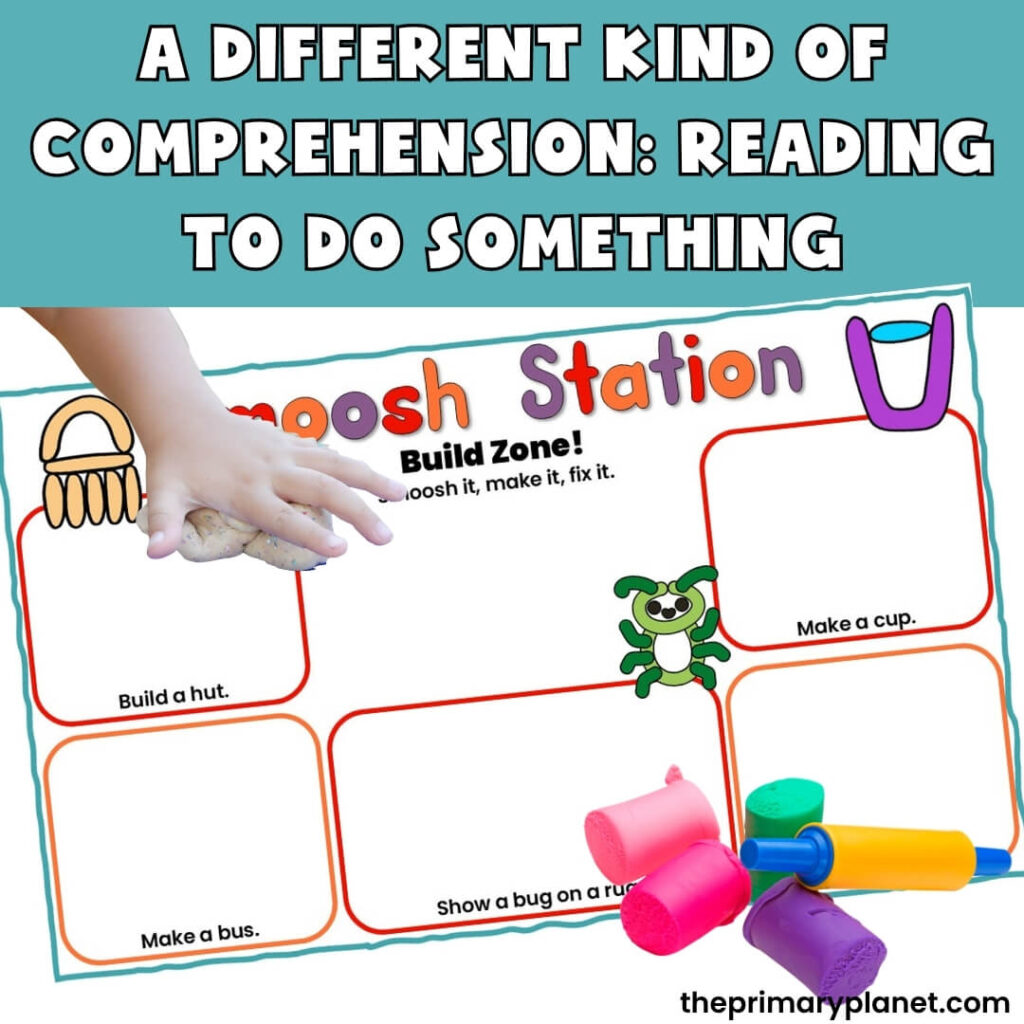
My Decodable Playdough Mats were built around exactly this. Every challenge is written using CVC words and sight words your kids already know, so they can read the mat and follow it themselves, no me reading it out loud, no me hovering over their shoulder translating. A kid reads “make a rat in a hat” and has to actually understand what that means well enough to go do it. That’s comprehension too, just a version of it we don’t always name out loud.
Plus, it’s decoding practice hiding inside a hands-on center, so it’s doing double duty without asking for extra time in your day, which I’m always going to be a fan of.
None of this needs to be a separate unit or a whole new block of your schedule. Comprehension isn’t really one skill anyway, it’s a bunch of small moves, thinking out loud, predicting, rereading, following directions, and most of them fit into stuff you’re already doing if you just tilt it slightly.
Pin the image above to save this post for later! Sharing is caring!
Want a sample before you commit to anything? I’ve got a freebie tucked into my Free Resource Library — just pop your email in and it’s yours.
If you want something ready-made to keep these strategies going, check out my Reading Comprehension Strategies and Goal Setting Bookmarks and my Decodable Playdough Mats in my shop.
Follow me on TpT! New products are 50% off for the first 24 hours after posting — you don’t want to miss that. Follow my store here.
Happy Teaching,