

Hey there, teacher friend! Today, I want to talk with you about sequencing, putting things in order, and why you need to teach it to your budding writers (and readers) in your elementary classroom.
Why Sequencing Matters in Early Writing
When you’re teaching young writers, there’s always that one story that starts with “First we went to the zoo” and ends with “Then we went to bed,” and everything in between is a beautiful blur.
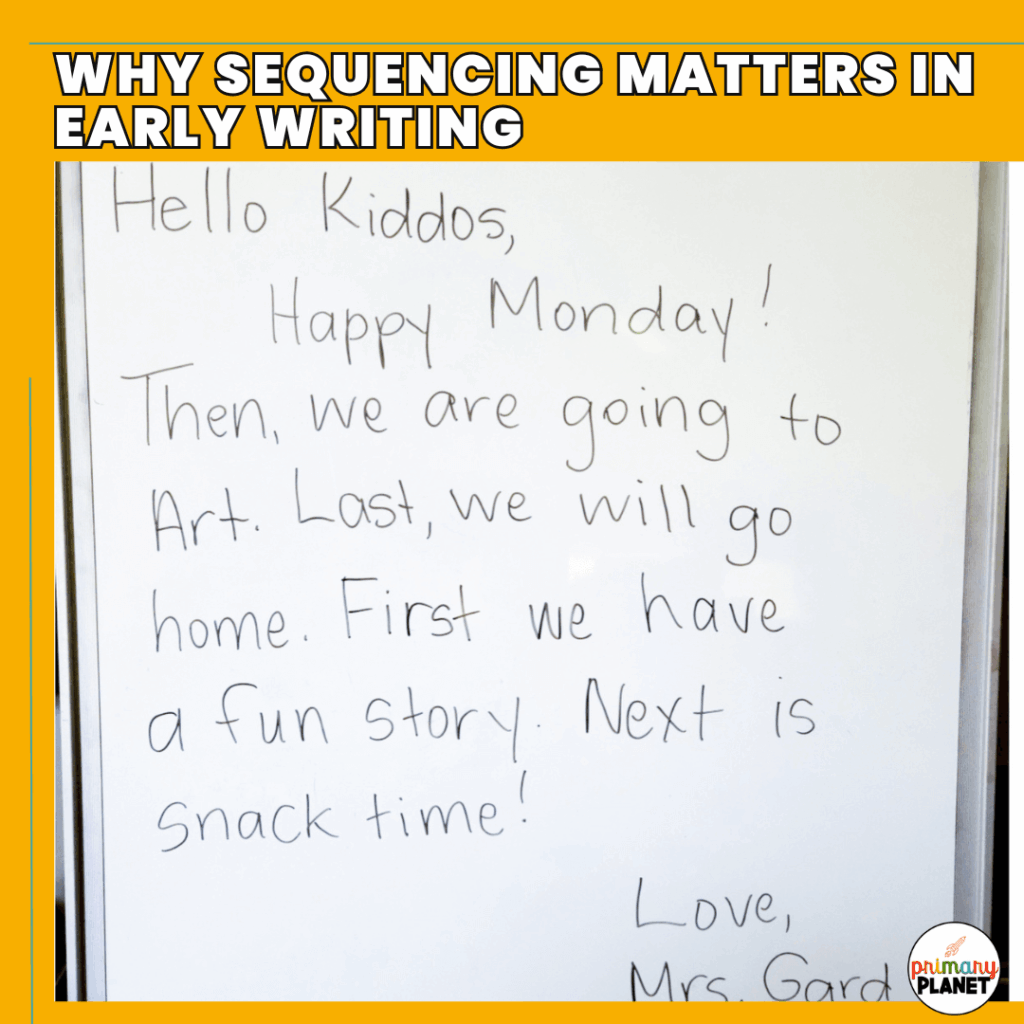
Sequencing is one of those foundational skills that helps students make sense of the world around them — and their own writing. It’s how they learn to tell a story that actually makes sense. The U in CUPS.
In reading, sequencing helps students understand cause and effect and remember key details. In writing, it gives structure to their ideas so their stories flow naturally. Without it, we get those wonderful but slightly confusing tales where “the dog ran away, and then it rained, and then I had pizza.”
Everything else falls into place when students learn to organize their thoughts into beginning, middle, and end. Their writing improves, their comprehension deepens, and their confidence grows.
The Common Sequencing Struggle
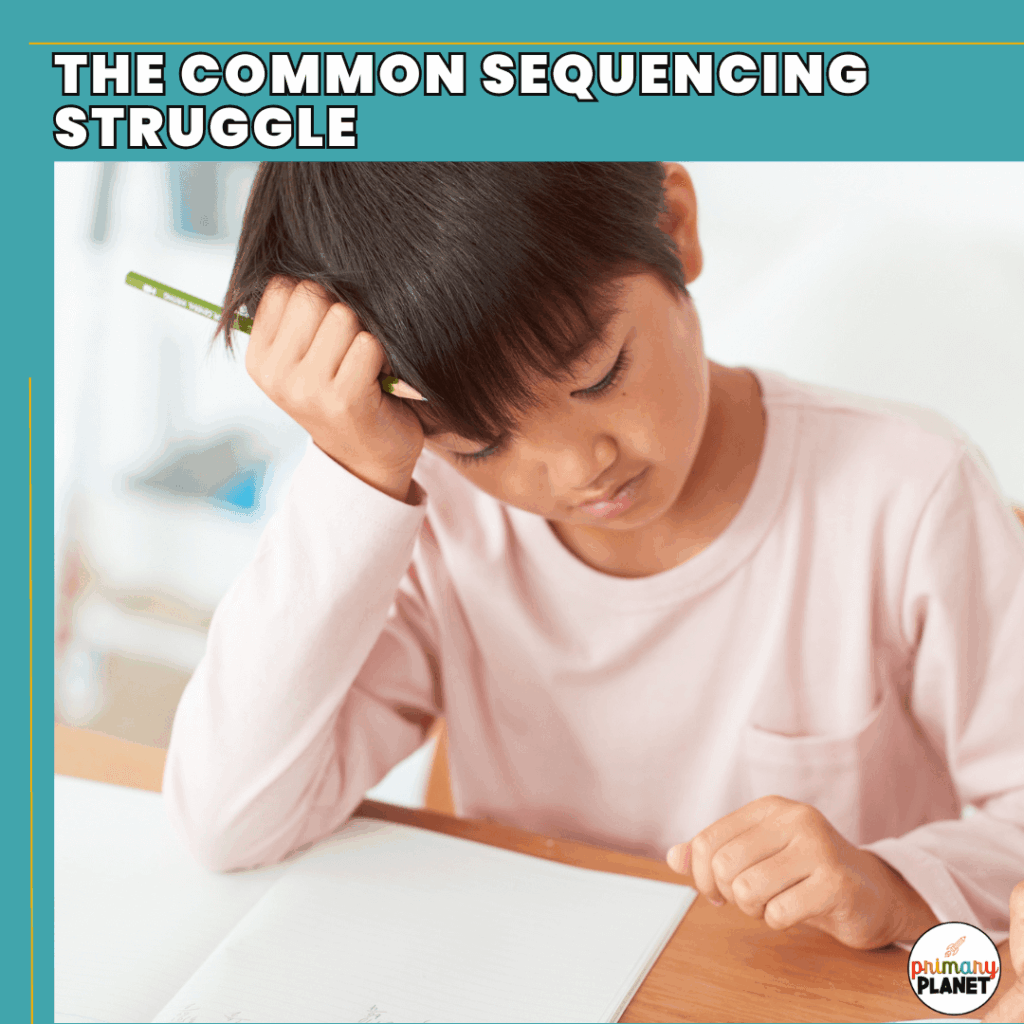
For most early writers, the struggle isn’t having ideas — it’s organizing them. Students often know what happened in a story, but putting events in order or using transition words can feel tricky.
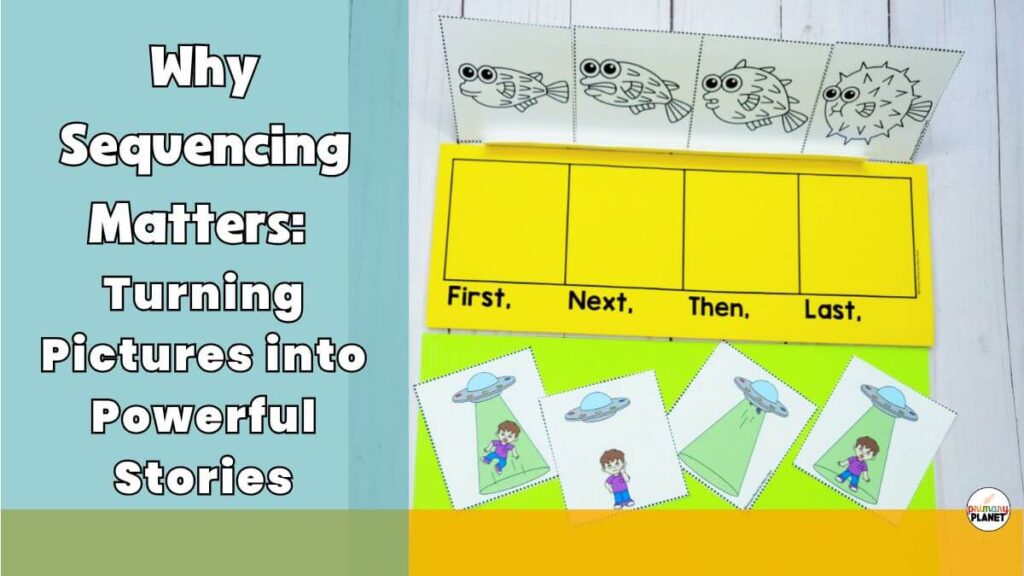
That’s why I love teaching sequencing with picture-based activities. Pictures give students visual support and help them see how one event connects to the next. Once they can describe the pictures in order, moving into sentences and paragraphs becomes much easier.
How to Teach Sequencing Step-by-Step
Using Sequence Stories resources, here’s how to break sequencing down in your classroom.
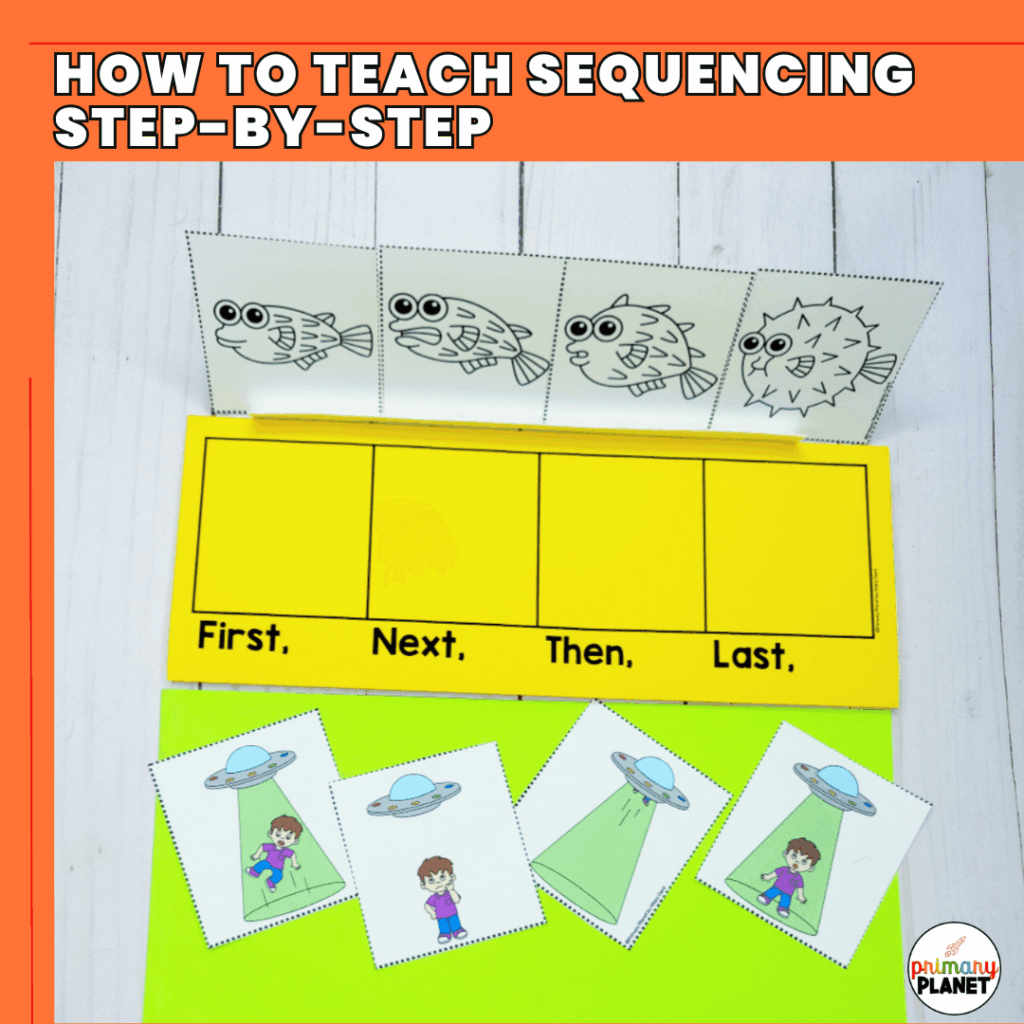
Step 1: Start with Picture Cards
Begin by showing students a simple four-picture story. For example, a girl planting a seed, watering it, watching it grow, and picking a flower.
We look at all the pictures together and talk about what’s happening. Then, put the pictures in order with your kiddos and tell the story out loud. This gives students a concrete way to understand sequence before they ever pick up a pencil. You can find the picture cards and transition words organizer, along with a transition words poster, in my Free Resource Library.
Step 2: Model Oral Retelling
Once the pictures are in order, model how to retell the story aloud using sequencing words: First, Next, Then, Finally. You can use this fun sequencing freebie in my Free Resource Library!
Then, students practice retelling to a partner. I love using sentence stems here:
- “First, I see…”
- “Next, the boy…”
- “Then, it starts to…”
- “Finally…”
The goal is to build fluency with language and structure before writing.
Step 3: Add Words
Next, we move from pictures to words. Students write a simple sentence for each picture. You can have them use Sequence Stories writing templates, which include boxes for illustrations and lines for sentences.
As they write, I encourage them to reread each sentence to make sure the story flows in order. This is where the magic happens — when they see their pictures turning into a real story.
Step 4: Use Transition Words
Once students are comfortable sequencing with pictures and sentences, we start using more transition words to add variety: Before that, after, meanwhile, at last.
We might even make an anchor chart of sequencing words (freebie in my Free Resource Library) to keep up all year.
Step 5: Move Into Shared or Independent Writing
Finally, take what they’ve learned and apply it to their own writing. I might give a new set of picture prompts or ask them to draw their own. Plan the story together as a class (shared writing) or let students try it independently.
The goal is always to help students internalize that stories have order. Once they get it, their writing becomes so much clearer and more confident.
Beyond Writing: How Sequencing Builds Comprehension
Sequencing doesn’t just belong in writing lessons — it’s just as important in reading. When students can identify what happened first, next, and last, they’re better at summarizing, retelling, and understanding cause and effect.
You can use sequencing cards after read-alouds, too. Have students retell the story with pictures or write about the order of events in a favorite book. It’s a wonderful way to blend comprehension and writing practice.
Fun Ways to Extend Sequencing Practice
Once students understand sequencing, it opens the door for so many fun extensions:
- Class Books: Create a shared writing project where each student writes and illustrates one part of a class story.
- Story Scramble: Give students quick “story scramble” challenges where they must put mixed-up pictures back in order.
- Sentence Strips: Write sentences from a story on strips of paper and have students arrange them correctly.
- Digital Sequencing Slides: Use images on your interactive board for drag-and-drop sequencing.
The key is repetition in different formats — seeing, saying, writing, and doing.
Ready to Help Your Students Turn Pictures into Stories?

If you’re looking for ready-to-use sequencing activities that support both reading and writing, my Sequence Stories resources make it simple.
Each set includes:
- Picture cards for hands-on sequencing
- Writing templates in color and black and white
- Transition words support
- Shared writing and independent practice options
- Printable or Digital with Moveable Pieces
You can start with one theme or grab the full year bundle to have sequencing practice ready for every season.
-

Sequencing Stories with Pictures: FULL YEAR Sequence of Events Writing Activities – Prodedural Writing
$24.00 -
Fall Story Sequencing Worksheets with Story Sequencing Pictures for Writing
$6.00 -
Fun Sequence Writing Prompts – Anytime Sequencing Worksheets
$6.00 -
Winter Sequence Writing Activities- Sequence of Events Worksheets- Winter Procedural Writing
$5.99
Love this idea? Save it now so you’ll have it ready when you teach sequencing!

Happy Teaching,
Hilary