


Hey there, teacher friend. Do you love the idea of hands-on science, but sometimes the reality feels a little overwhelming? Between the planning, the supplies, and the cleanup, it’s easy to let science slide to the back burner when the week gets busy.
But here’s the good news: you don’t need complicated experiments to help your students think like scientists. In fact, some of the best science learning happens when students simply stop, look closely, and record what they notice.
That’s where observation journals come in. They’re simple, no-prep, and surprisingly powerful. Whether you use them during your science block, morning work, or even literacy time, observation journals help students connect curiosity, critical thinking, and writing—all in one quiet little routine.
Let’s take a closer look at how these journals can bring real, meaningful science into your classroom without adding one more thing to your to-do list.
Why Observation Journals Matter in the Primary Classroom
If there’s one thing we know about young learners, it’s that they are natural scientists. They are curious, full of questions, and always ready to explore how the world works. The challenge for many teachers is finding ways to nurture that curiosity without spending hours prepping elaborate experiments.
That’s where observation journals come in.
Observation journals give students a way to slow down, look closely, and record what they notice. They are an easy and meaningful way to build science skills and connect learning across subjects. Whether students are watching the weather, a class plant, or something as simple as the classroom goldfish, observation journals help them think like scientists—without the mess or prep of traditional experiments.
The Benefits of Using Observation Journals
Observation journals do more than just fill time during science block. They help students develop skills that cross over into reading and writing too.
Here’s why teachers love using them:
- They build curiosity. Students start noticing small details about their world and asking better questions.
- They strengthen observation and recording skills. Students learn to document what they see, hear, and feel with words and pictures.
- They connect science and writing. Journaling gives real purpose to writing—students write to record, describe, and reflect.
- They promote independent thinking. Students learn to make predictions and form simple hypotheses naturally through observation.
- They’re easy to manage. All you need is a notebook or a printed page, and you’re ready to go.
It’s science that fits into the rhythm of your classroom, not something that takes it over.
How to Get Started with Observation Journals
If you’ve never used observation journals before, you’ll be surprised at how simple they are to integrate. Here’s a step-by-step structure to help teachers get started.

Step 1: Choose What to Observe
Start small. You might begin with the weather, a class plant, or an object students can observe over several days. Seasonal changes work beautifully—like tracking the color of leaves in fall or noticing the length of shadows throughout the day.
Step 2: Model How to Observe
Show students what it means to really look. Demonstrate how to use all their senses (except taste!) and how to describe what they notice with precise language. Use a think-aloud to model curiosity. For example, “I notice the leaves look a little different today. I wonder why that is?”
Step 3: Record Observations
Students draw or write what they see in their journals. Encourage both words and pictures, since many primary students still communicate best through drawing. Prompts like “I notice…,” “I wonder…,” and “I think…” are wonderful sentence starters.
Step 4: Reflect and Discuss
After journaling, invite students to share their observations. This step builds vocabulary and reinforces speaking and listening skills. Over time, these short reflections turn into scientific thinking—students begin connecting cause and effect naturally.
Step 5: Revisit and Compare
One of the most powerful parts of observation journaling is comparison. When students look back at previous entries, they can see changes and patterns over time. This builds an authentic understanding of scientific processes.
Want to try adding some more observation activities into your day? Try this free observation journal! Just sign up for my Primary Planet newsletter and get access to my free resource library! Click the button to sign up:
Ways to Use Observation Journals Throughout the Year

Observation journals are flexible and can fit into almost any science unit. Here are a few ways teachers use them:
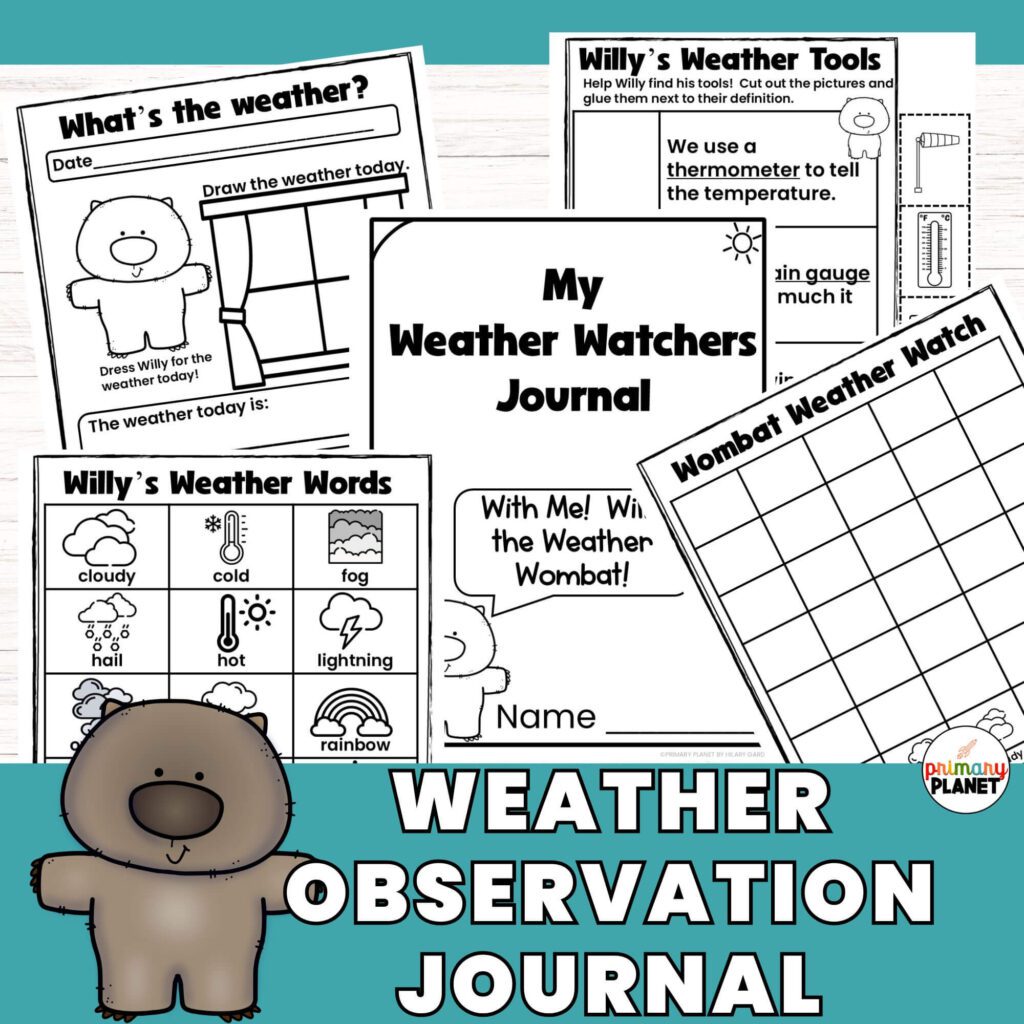
- Weather Watchers: Track daily weather, temperature, and sky observations. Perfect for connecting to graphing in math.
- Plant and Animal Studies: Observe seeds sprouting, classroom pets, or outdoor insects.
- Seasonal Science: Record signs of changing seasons—colors, temperatures, or daylight hours.
- STEM Connections: Pair journaling with design challenges. Students can sketch designs, note changes, and reflect on what worked or didn’t.
- Five Senses Exploration: Have students document what they see, smell, hear, and feel during short sensory walks.
If you want to make it even easier, my Observation Journals include ready-to-go pages and prompts for weather, plants, animals, and seasonal studies—all designed to align with early science standards.
Connecting Observation to Writing and Reading
One of the best parts of using observation journals is that they naturally support literacy. When students record what they see, they’re practicing writing for a purpose. When they discuss their findings, they’re building oral language and vocabulary.
Here’s how teachers can integrate literacy easily:
- Label drawings to reinforce phonics and spelling skills.
- Write “What I Noticed Today” sentences to practice grammar and sentence fluency.
- Read nonfiction books connected to what they’re observing, then compare text information to real-life findings.
Observation journals don’t just teach science—they help students think like writers and write like scientists.
Tips for Making Observation Journals Work

- Keep materials simple. A printed journal page or composition notebook is all you need.
- Schedule short, consistent observation times. Even five minutes a day makes a difference.
- Use visuals or anchor charts to model good observations.
- Encourage creativity and ownership—students can add photos, sketches, or diagrams.
- Revisit old entries to help students notice patterns or changes.
When used regularly, observation journals become a quiet but powerful routine that builds confidence, curiosity, and scientific thinking.
Ready to Bring Real Science into Your Classroom?
If you’re ready to give your students a meaningful way to explore science without adding to your prep list, try using Observation Journals.
Each journal in my collection includes:
- No-prep printable pages
- Student-friendly prompts
- Writing lines and drawing space
- Themed versions for weather, plants, and animals
You can start small with one topic or use them all year long to build a habit of scientific observation.
Want to try adding some more observation activities into your day? Try this free observation journal! Just sign up for my Primary Planet newsletter and get access to my free resource library! Click the button to sign up:
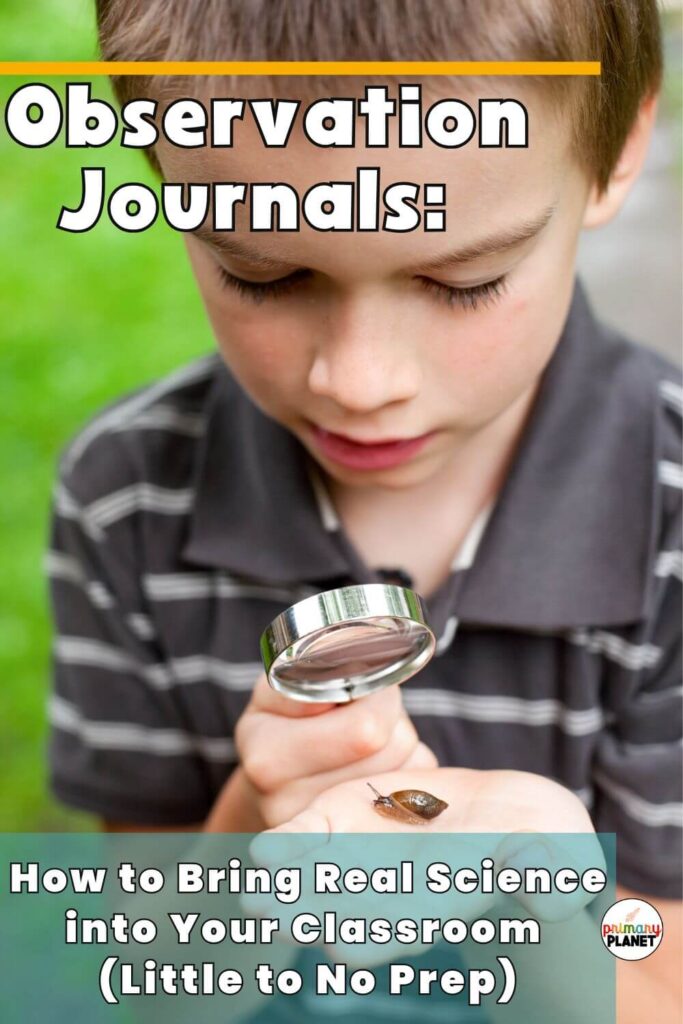
If you want to remember these ideas for your next science unit, pin this image to your Science Activities or STEM Ideas board. It’s the perfect reminder for when you’re ready to bring more hands-on exploration into your classroom.
Happy Teaching,
Hilary