How-to writing. Also known as procedural writing. Also known as the thing that sounds so simple until you’re actually standing in front of a group of first graders trying to explain what a “step” is.
Procedural writing is one of those units that can go really, really well. Or it can kind of fall apart around day three when someone decides that step one of making a sandwich is “go to the store.” Not wrong, technically. But okie dokie, let’s back up.
The good news? There are some simple ways to make how-to writing click for young writers. Let me share what worked for me.

Start With What They Already Know
Before you introduce the word “procedural,” think about what your students already do in a sequence every single day. Getting dressed. Making a snack. Playing a game at recess.
I always started with something silly. Like, “How do you make a peanut butter sandwich?” And then I’d pretend to be completely clueless. Pour the peanut butter directly onto the table. Kids would absolutely lose it. And then—without me having to do much explaining at all—they’d start telling me I was missing steps. That I needed to do things in order.
That’s the whole lesson, honestly. Order matters. Steps matter.
How-To Writing Anchor Charts Are Your Best Friend
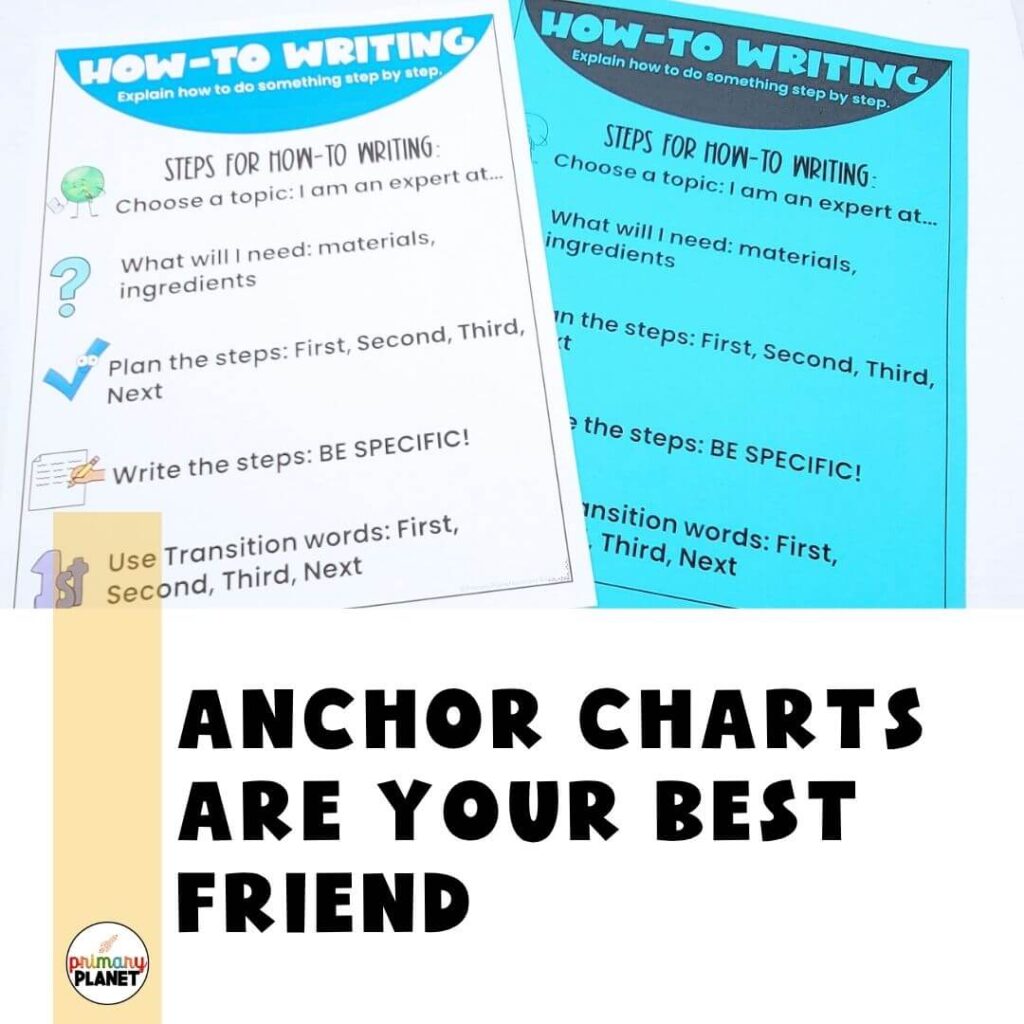
Before your students write a single word, put up an anchor chart that shows the structure. First. Next. Then. Last. Keep it visual, keep it simple, and refer back to it constantly. I used to have students keep a small black-and-white version in their writing folders. That little thing saved so many “wait, what comes after next?” questions.
The I DO / WE DO / YOU DO Approach
I DO: Model a complete how-to piece out loud. Think aloud as you write. Show them what it looks like to plan before you put anything on paper.
WE DO: Write a how-to together as a class. Pick a shared experience—”How to Line Up for Lunch” works great. Students give you ideas, you guide the structure. Messy learning is good learning.
YOU DO: Let them try it. Have them use the anchor chart. Circulate. Celebrate what they’re doing right before you point out what’s missing.
Topic Choice Matters More Than You Think
Students write better how-to pieces when they genuinely know how to do the thing. Let them pick topics they’re actually experts on. How to build a Minecraft house. How to feed a dog. How to do a cartwheel. When kids write about something they care about, the steps come naturally and the details show up without you even having to ask.
Make It Social
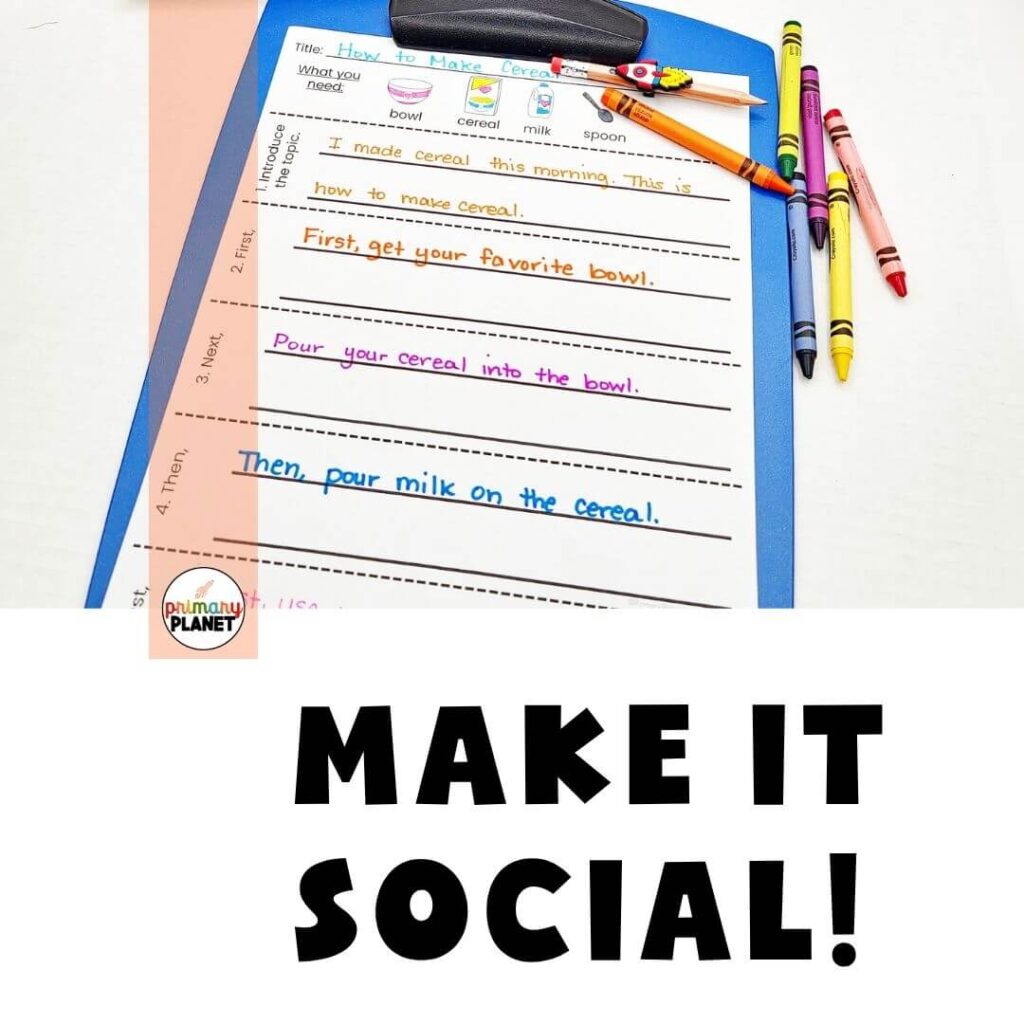
One thing that always helped my students was practicing the writing together before doing it independently. Try a “Pass the Page” activity where each student writes one step and then passes the paper to the next person. It’s low-stakes, collaborative, and honestly kind of hilarious to see what happens when six first graders try to collectively explain how to brush their teeth.
This is exactly what I built into my How-To Writing Games. Each game practices one step of the how-to writing process—students pass the page, each writer adds their piece, and at the end they read the whole thing together. Includes 25 pass-the-page games, an anchor chart in color and black-and-white, and an editable version so you can make your own prompts. Great for small groups, writing centers, or even with a guest teacher. Check it out if you want a ready-to-go option!
Don’t Skip the Sharing Moment
After students finish a how-to piece, let them share. Have a partner try to follow the steps in their head. Did anything get skipped? Did the reader end up lost somewhere in the middle? That feedback loop is where the real learning sticks—even for five- and six-year-olds.
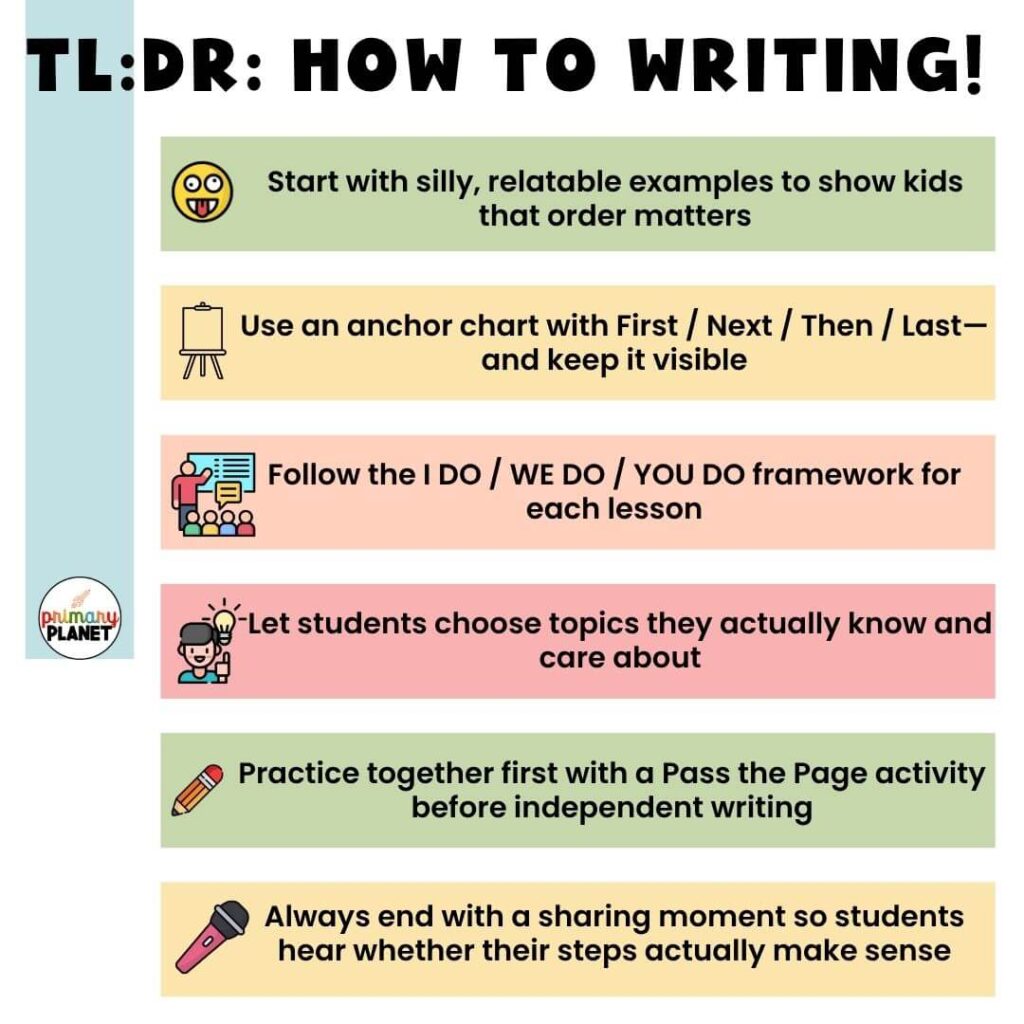
TL;DR How-To Writing
- Start with silly, relatable examples to show kids that order matters
- Use an anchor chart with First / Next / Then / Last—and keep it visible
- Follow the I DO / WE DO / YOU DO framework for each lesson
- Let students choose topics they actually know and care about
- Practice together first with a Pass the Page activity before independent writing
- Always end with a sharing moment so students hear whether their steps actually make sense
How-to writing doesn’t have to feel overwhelming. Start with what they know, give them the structure, let them practice together, and celebrate the small stuff. Your kids can do this. And it might even be kind of fun along the way.
📌 Pin the image below to save this for later! Happy Teaching!