

Okay, friends. Let me tell you about one of the simplest classroom organization systems I ever set up. A Student Numbering System.
Here’s how a student numbering system works. You take your class list, the one that’s already in alphabetical order, and you number it. First kiddo on the list is #1. Next one is #2. And so on down the line. That’s it. That’s the whole setup.
Sounds almost too simple to matter, right? But this little system saved me more time and headaches than just about anything else I did.
So why use student numbers instead of just names? Names change. Kids move in, kids move out, and suddenly, your carefully labeled everything is a mess. But a number? A number is just a spot. And honestly, once you start using numbers, you find more and more uses for them. It kind of sneaks up on you.
Let me share some of the ways I used them.
As an Amazon Associate, I earn from qualifying purchases. This post may contain affiliate links, which means I may earn a small commission (at no extra cost to you) if you click through and make a purchase. I only recommend products I genuinely use and love in my own teaching. Thank you for supporting The Primary Planet!
Ways to Use a Student Numbering System in the Classroom
Lining up. This was the big one. “Line up in number order!” No pushing to be first, no arguing about who cuts whom. Everyone knows their spot. Quick and (mostly) drama-free.
Mailboxes. I labeled my (Amazon Affiliate Link) mailboxes with student numbers instead of names. The best part? I never had to redo them. Each new year, kiddo #1 just gets mailbox #1. The labels stay put year after year. Easy peasy.
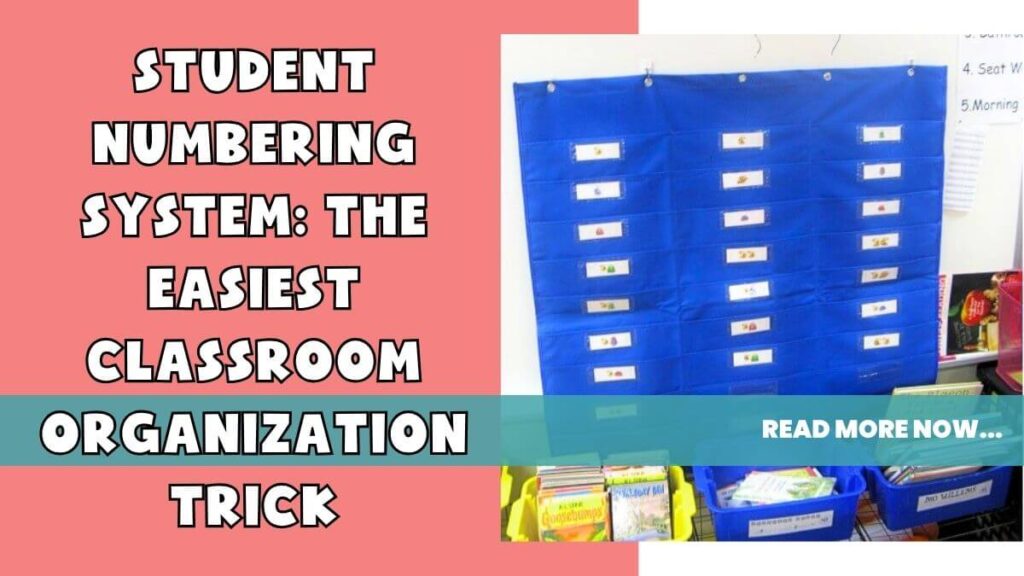
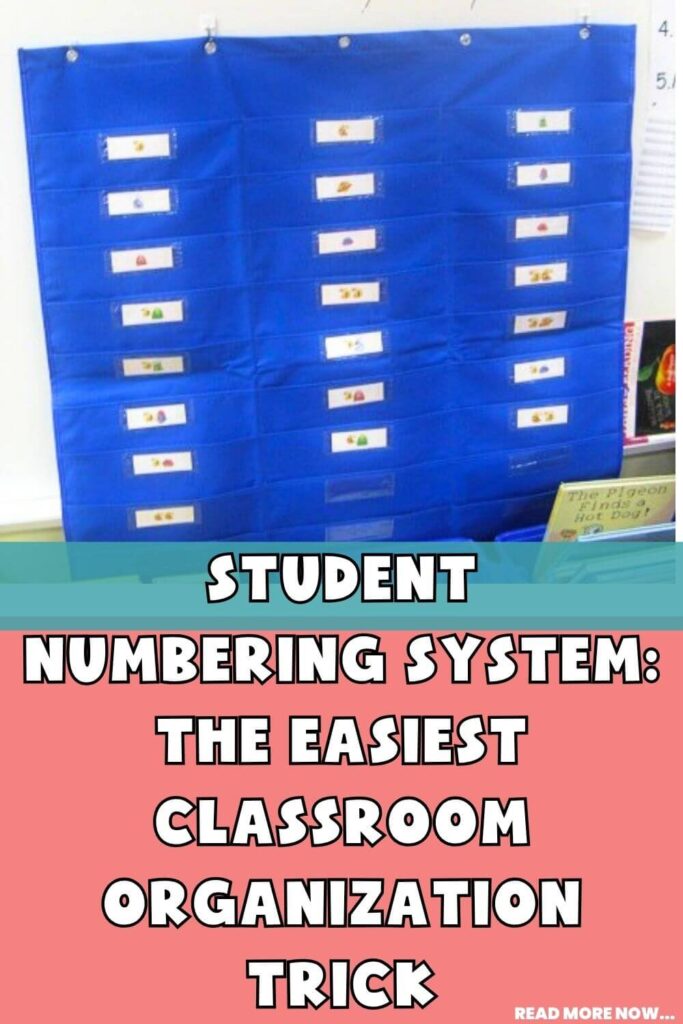
Paper turn-in chart. This is where the magic happens. I use a (Amazon Affiliate Link) pocket chart with a numbered pocket for each kiddo. They drop their work in their own pocket when they come in, and one glance tells me who’s missing an assignment—those numbers go up on the board. Then I pull the papers out in number order.
And here’s the bonus: it pretty much wipes out the no-name paper problem. Even when a kiddo forgets to write their name, the papers are already in number order, so I know exactly whose is whose. No more holding up a mystery paper asking “whose is this?” I broke the whole system down over on my No Name Papers Hack post if you want to see it in action.
Labeling supplies and cubbies. Same idea as the mailboxes. Number the cubbies, the book bins, the supply spots. A big part of classroom organization is just not having to redo things, and numbers handle that for you.
Quick grouping. Need partners or small groups fast? Use your student numbers! “Odds with evens” or “1 through 10 over here.” It’s a sneaky-quick way to mix kids up without a whole production.
Job rotations. Student numbers make it simple to rotate classroom jobs or turns fairly. You always know whose turn is next, and the kids do too.
Putting papers in order. When students turn in work in number order, alphabetizing for your gradebook is already done. I know that sounds like a tiny thing. But over a whole year, those tiny things add up.
Now, I’ll be honest. It takes the kiddos a week or two to memorize their number. There’s always a few who need a little reminder at first. But once it clicks, it really clicks. They’ll surprise you with how fast they learn it.
No matter how you decide to use them, the beauty of a student numbering system is that it’s no-prep and it works for you all year long. Set it up once in the fall and let it carry you through June.
Give it a try this year. I think you’ll wonder how you ever managed your classroom organization without it.
📌 Sharing is caring! Pin the image below to save these student number ideas and pass them on to a teacher friend!
Happy Teaching,
Hilary