

Let’s talk reading goals (but in a way that makes sense for actual classrooms)
Reading goals often sound bigger than they are.
I don’t know about you, but when I first heard the phrase “set individual reading goals with your students each week,” my brain immediately flashed to endless checklists, mountains of sticky notes, and me—somehow—keeping track of 24 unique goal paths. That’s a lot. Too much, really.
But the more I worked with small groups and thought about what reading goals should be, the more I realized they don’t need to be flashy or overly formal. They just need to help students understand why they’re reading—and give them something to aim for as they do it.
So, let’s take a breath and talk through what this actually looks like in small group reading instruction.
Start with this: “What’s the point of reading this?”

It sounds so simple, but asking that question can shift everything.
Kids don’t always know why they’re reading what they’re reading. They just know it’s what’s on the table, or in the basket, or handed to them with a cheerful, “Okay, let’s go!”
But when we help students define a purpose for reading—something specific they’re looking for, thinking about, or working on—it suddenly feels a little more grounded. That’s what reading with a purpose is all about.
It doesn’t have to be complex:
- “I’m reading to figure out how the character solves the problem.”
- “I’m reading to notice when the author uses clues to describe the setting.”
- “I’m reading to practice reading smoothly with expression.”
That’s it. That’s your goal.
Why small group reading is the place for goals
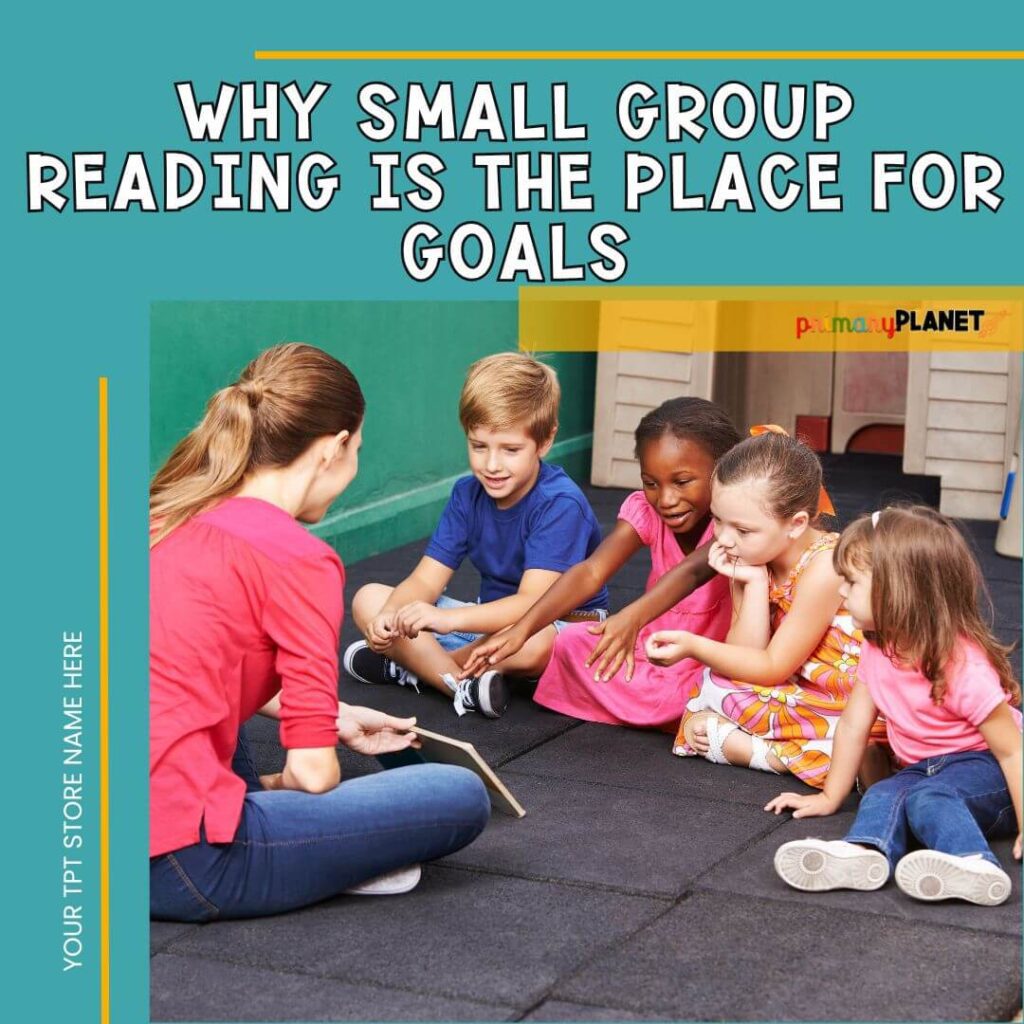
Whole-group reading lessons have their place (they’re great for modeling strategies and shared reading experiences), but small group is where the real magic happens.
Small group is where you can:
- Hear each student read.
- Talk with them individually about their thinking.
- Gently push them forward in a way that actually fits where they are.
And that’s where reading goals come in. You can tailor them, revisit them, and scaffold them—all without stopping everything for the rest of the class.
But… how do I actually manage all these goals?
That’s the part that usually gets a little murky. Because when you’re managing five or six groups and trying to remember who’s working on what, it can feel like your brain has too many tabs open.

Here are a few strategies that help:
1. Use simple reading comprehension checklists
Instead of reinventing the wheel, create or use checklists with common goal areas:
- Retelling the story in order
- Identifying character traits
- Noticing nonfiction text features
- Making predictions
- Asking and answering questions
When I made my Reading Goal Bookmarks, I basically pulled together all of those skills into bite-sized versions students could keep right in their books. The bookmarks aren’t the focus—they’re a tool. Something to hold and refer back to. Something that says, “Here’s what I’m working on.”
They make it so much easier to set goals without needing a new sticky note every single time.
2. Make it visible—for you and your students
Whether it’s a small goal card, a notebook, or yes, a bookmark, having a visual reminder of the goal makes a huge difference. Students forget otherwise. (We all do.)
You might even want to keep a quick-reference tracker at your table so you can jot down the date, the goal, and a quick note. Nothing fancy—just a reminder.
3. Model it with your think-alouds
This is something that gets overlooked, but it’s important.
If you want your students to start reading with a purpose, model what that sounds like.
Say things like:
- “Before I start, I’m going to focus on how this character changes from the beginning to the end.”
- “I noticed a lot of bold words and headings. I think this book wants me to learn something new.”
When they hear it enough, they start internalizing it. It becomes part of their reading mindset.
Rethink what “success” looks like
This one is tough. We want students to meet their goals. Of course we do. But the goal isn’t perfection—it’s progress. Not every student will master the skill in a week. (And if they do, maybe the goal wasn’t quite ambitious enough.)

It’s okay to keep working on a goal over several small group sessions. In fact, sometimes the best learning happens when students revisit the same goal with new texts or more complex ideas.
Progress is enough.
And hey, sometimes the goal shifts. That’s human. That’s teaching. That’s reading.
A few ready-to-use reading goal ideas
If you need a place to start, here’s a short list of reading goals that work well for small group:

For Fiction:
- I can retell the story using beginning, middle, and end.
- I can describe how the character changes.
- I can figure out the problem and solution.
- I can use evidence to describe the setting.
- I can make a smart prediction and explain why.
For Nonfiction:
- I can use headings and pictures to find information.
- I can tell the main idea and two supporting facts.
- I can explain a new word using context clues.
- I can describe how the text is organized (like compare/contrast or sequence).
- I can ask and answer questions about what I read.
Some teachers write these out on small cards. Others use bookmarks (like the Reading Goal Bookmarks I made) to keep things consistent. However you do it—keep it simple, meaningful, and doable.
Final thought: Less pressure, more purpose
If I could give one piece of advice to any teacher trying to implement reading goals in their small groups, it would be this:
Don’t overcomplicate it.
Your goal as the teacher is to help students think as they read. To read with purpose. To grow, little by little, in their understanding and confidence.
Reading comprehension checklists, bookmarks, sticky notes—they’re just tools to support that growth.
You don’t need to manage everything perfectly. Just plant the seed. Help students see that reading is about something. Help them care.
That’s where the magic is.
TL;DR:

Reading goals don’t need to be complicated. They just need to be clear and meaningful. In this post, you’ll find realistic, classroom-tested tips for making reading goals work in your small groups—using simple tools like reading comprehension checklists and purpose-driven strategies. Bonus: Grab my free set of Reading Goal Bookmarks to help get started.
Want a Free Sample?
If you’d like to try out the Reading Goal Bookmarks mentioned in this post? Join the Primary Planet Newsletter for access to my free resource library, happy teacher tips, freebies, and resources to make small group time a little smoother.
Let’s help our students read with purpose—one small group at a time. Pin the image below to save for later!