
Hey there, Teacher Friend! Teaching writing in primary grades can sometimes feel like climbing a mountain in flip-flops. You’re juggling sentence structure, spelling, punctuation, vocabulary, and then—just when you think you’ve got it—half the class is distracted by a wiggly tooth or a loose crayon. Honestly, it can be overwhelming.
That’s why shared writing is one of my very favorite teaching strategies. It makes the whole writing process more manageable for kids (and teachers!) and turns it into something fun, collaborative, and confidence-boosting.

What Is Shared Writing?

Shared writing is when the teacher and students work together to create a piece of writing. The teacher acts as the scribe, but the ideas, words, and sentences come from the class.
Think of it as pulling back the curtain and showing kids exactly how writers think:
- Which words sound best?
- How do we start a sentence?
- What happens when we make a mistake?
It’s not just about writing words on the board—it’s about modeling the process. And when kids see it step by step, they start to believe, “Hey, I can do this too.”
Why Shared Writing Is Such a Powerful Teaching Strategy

I love shared writing because it solves so many common writing struggles:
- It models the writing process. Kids see you brainstorm, draft, and revise in real time.
- It builds vocabulary. They hear new words and phrases in context and get to try them out.
- It reduces pressure. Reluctant writers feel safe because the responsibility is shared.
- It strengthens reading. Students connect what they know about reading with how writing works.
- It builds community. You’re literally writing something together as a class—everyone’s voice matters.
How to Use Shared Writing in the Classroom

You don’t need anything fancy. Here’s my simple framework for shared writing:
- Pick a Purpose. Maybe it’s a class thank-you note, a retelling of a read-aloud, or even a silly story. This is a perfect time to talk about YOU being the author so you need to determine the purpose.
- Brainstorm Together. Write down key words, ideas, and phrases students suggest.
- Draft as a Team. Scribe the sentences, talking out loud about your choices: “Hmm… should we start with ‘One day’ or ‘Suddenly’? Which sounds more exciting?”
- Revise in Real Time. Cross out, replace words, add details—show that writers don’t get it perfect the first time. Use an ARMS revising checklist and a CUPS editing checklist!
- Celebrate. Read the finished piece together and display it proudly.
Favorite Shared Writing Activities

Here are a few ways I love using shared writing with primary students:
- Morning Message. Write a greeting together and add a fun sentence starter.
- Class Books. Create themed collections like Our Best Recess Games or If I Had a Pet Dragon.
- Science Observations. Record findings from an experiment as a group.
- Thank-You Notes. Perfect after field trips, assemblies, or parent volunteers.
- Creative Writing Prompts. Make up a silly adventure story together—kids eat this up.
Tips for Making Shared Writing Work
- Keep it short. Five to ten minutes is plenty.
- Think out loud. Let kids “hear” your writing brain.
- Use sentence frames. These give kids a structure to build from.
- Let students scribe. When ready, invite a brave volunteer to add a word or sentence.
- Celebrate mistakes. Model how revising and editing make writing stronger.
Final Thoughts
If I had to choose just one favorite strategy for teaching writing, it would be shared writing every time. It’s flexible, it’s simple, and it meets kids right where they are. Most importantly, it gives them the confidence to take risks and see themselves as writers.
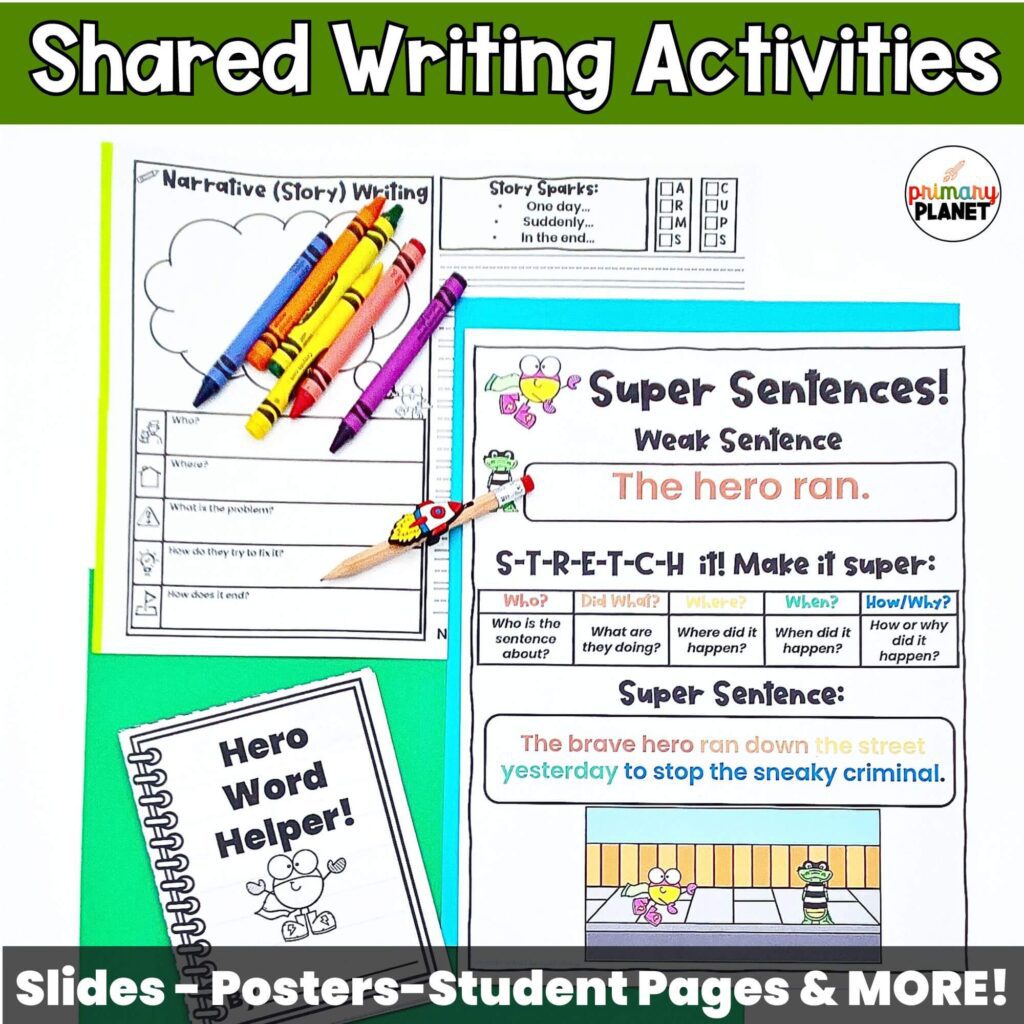
I’m put together a Shared Writing Starter Pack with prompts, sentence frames, and mini anchor charts to make it even easier for busy teachers. It’s a game-changer.
💡 Want to save this idea for later? Pin the image below so you’ll always have fresh shared writing strategies ready when you need them!
Happy Teaching,