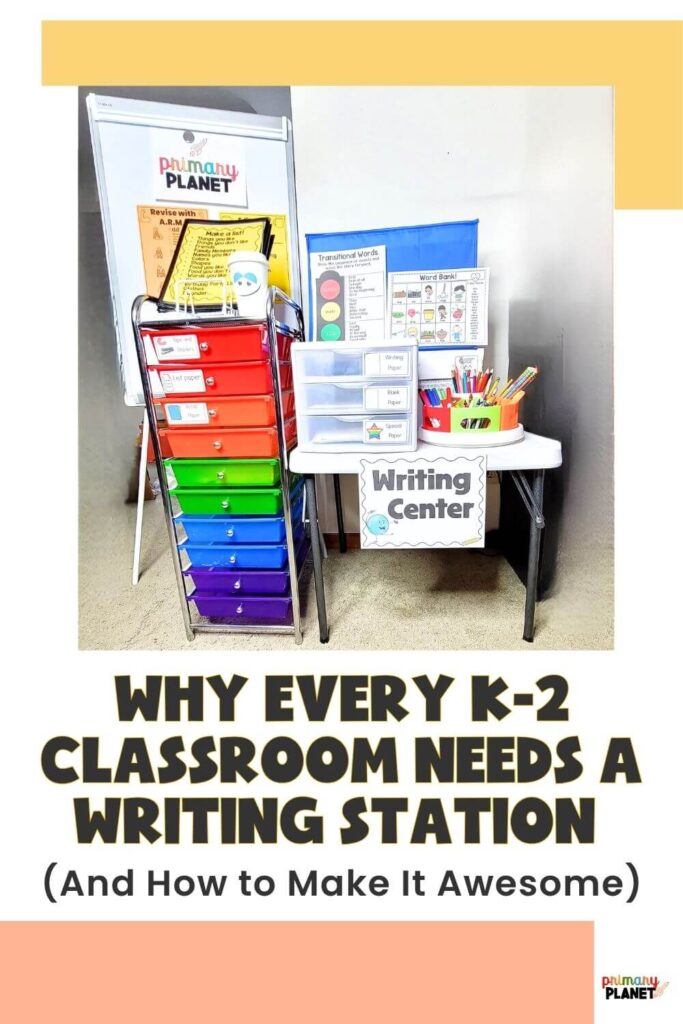

Okay, friends. Picture this. You’ve got 20 minutes of center time, and half your class is wandering around like they’ve never seen a classroom before. Sound familiar? In my 23 years of teaching primary grades, one thing stayed constant no matter what else I changed: my writing station. It was the one center I kept up all year long. And honestly? It was usually the most popular spot in the room.
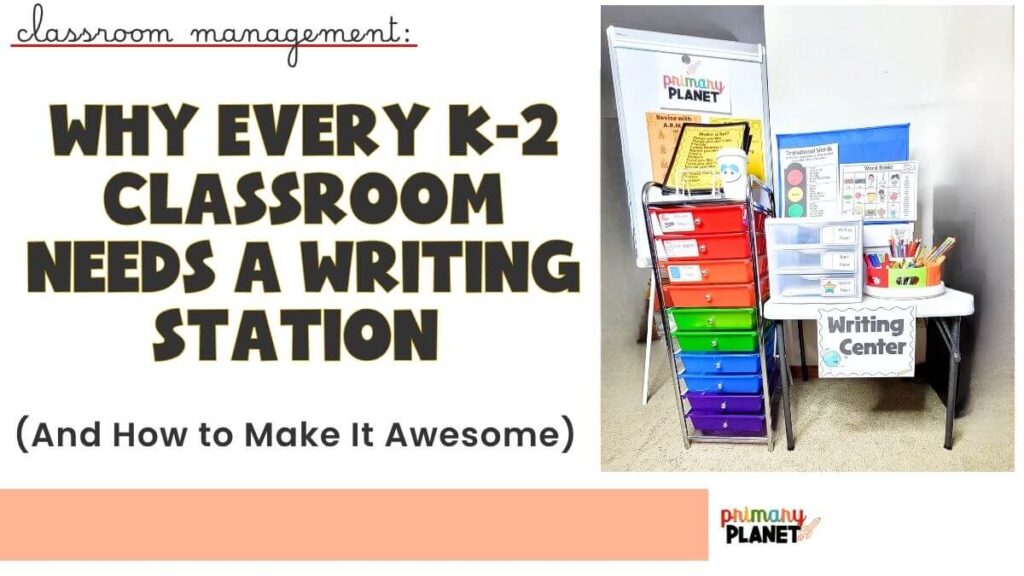
So let’s talk about why every K-2 classroom needs a writing center—and what to put in it.
Hey, just a heads up! This post contains Amazon Affiliate links. That means if you click a link and make a purchase, I earn a small commission—at no extra cost to you. I only share things I actually love and have used in my own classroom. Thanks for supporting The Primary Planet. It means the world!
Your Writing Station Sparks Creativity (Even in Your Most Reluctant Writers)
There’s something about having a dedicated writing spot that just… invites kids to create. When students have a go-to place in the classroom with interesting paper choices, fun prompts, and tools (Amazon Link) they can actually use, writing stops feeling like a chore. I used to rotate in different types of “special paper” each month—comic strip templates, mini-books, sticker story pages—and it made a huge difference. Kids who dragged their feet during whole-group writing would practically run to the writing station at center time.

Check out my Anytime Picture Writing Prompts if you want a simple, no-prep way to keep those creative juices flowing. Picture prompts are magic. I can’t explain it, but they just work.
It Gives Students a Safe Space to Practice
This one matters more than I think we sometimes give it credit for. The writing station is a low-stakes spot. There’s no teacher hovering, no pressure to get it “right.” Students can try things out, make mistakes, and ask questions at their own pace. I always tried to post a simple anchor chart or two nearby—something that reminded students about adding details or using a capital letter at the start of a sentence. Small scaffolds like that help a lot when you’re not right there to guide them.
It Builds Grammar and Comprehension Skills (Quietly)
Here’s the thing about a well-stocked writing station: it does some teaching for you. When kids are writing sentences about a picture prompt, they’re working on sentence structure. When they’re filling in a sticker story template, they’re thinking about sequence and details. It’s not flashy, but it adds up. A lot of the skill-building that happens at a writing center in the classroom is almost sneaky that way. The students don’t even realize they’re practicing—they just think they’re having fun.
It Strengthens Writing Skills Through Repetition
Writing gets better with practice. That sounds so obvious, but I think sometimes we underestimate how much independent writing time matters. Twenty minutes a week at a well-designed writing station adds up to a lot of writing over the course of a year.
And here’s where I want to make a little soapbox moment—please don’t replace your writing station with a tablet station. I know technology is everywhere, and it has its place. But there is real value in kids physically holding a pencil and forming letters by hand. The research on handwriting and brain development is pretty convincing. Beyond the research, I just know from 23 years of watching kids write that the physical act of writing helps them slow down, think, and produce more. A keyboard doesn’t do the same thing, especially for five and six-year-olds. Keep it hands-on. Paper, pencils, and maybe a good eraser. That’s your writing station.
It Creates Opportunities for Collaboration
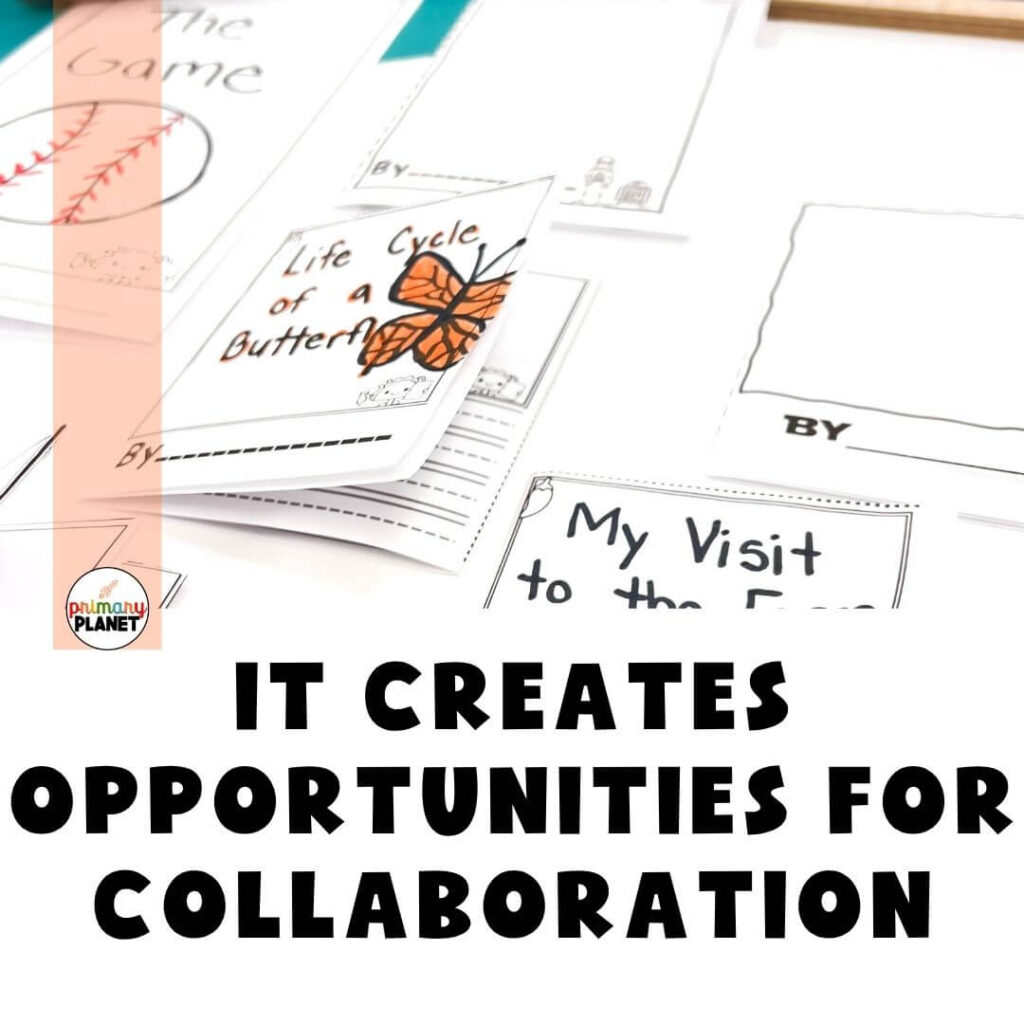
I didn’t always expect this one, but writing stations naturally become social spaces. Kids share ideas, read each other’s stories, and help each other come up with what to write next. Mini-books especially—students would finish them and immediately want to share them with a friend. Sometimes they’d add them to the classroom library. That kind of peer interaction around writing is genuinely valuable, and it’s hard to manufacture during whole-group instruction.
Check out my post on adding mini-books to your writing station for some easy ideas on making that happen.
How to Set Up Your Writing Station (Without Stressing Yourself Out)
I want to be clear: a writing center in the classroom doesn’t have to be complicated. It really doesn’t. Start with paper—lined paper, blank paper, and maybe one or two “fun” options. Add some writing tools. Post an anchor chart if you have one. Done.
If you want to keep your writing station fresh throughout the year (which, trust me, is worth it), check out my Writing Center Refresh Packs. They’re print-and-go, low-prep, and designed to switch things up each month so your students stay engaged. I’ve got monthly packs for everything from September all the way through the end of the year—themed writing paper, prompts, sticker story backgrounds, and more.
You can also grab some free writing station labels and a mini-book template in my Free Resource Library—just sign up for the newsletter and you’re in.
Okay. Set Up That Writing Station.
A dedicated writing space in your classroom is one of the simplest, most impactful things you can do for your young writers. It builds skills, sparks creativity, encourages collaboration, and keeps kids happily busy with pencils in their hands—which is exactly where they should be.
You’ve got this. Teach Happy.
📌 Save this for later! If you found this helpful, pin the image below so you can come back to it when you’re ready to set up or refresh your writing station. Your future self will thank you!