
Okay, friends. If there is one writing unit that gets kids genuinely excited to put pencil to paper, it is writing fractured fairy tales. Not just any fairy tales—fractured fairy tales. The kind where the Big Bad Wolf is suddenly the good guy, Cinderella refuses to go to the ball, or the Three Bears file a complaint with the local police. Kids go absolutely wild for this stuff. And honestly? So do I.
After 23 years in a primary classroom, I can tell you that fairy tale writing hits differently than other units. It is one of those magical combinations where strong literacy skills meet pure joy. That is exactly the kind of happy teaching I am here for.
**Heads up, friends! This post contains Amazon affiliate links. That means if you click a link and make a purchase, I may earn a small commission—at no extra cost to you. It’s one of the ways I keep The Primary Planet up and running, and I only ever share things I truly recommend. Thanks for your support!
Why Teach Fairy Tales and Fractured Fairy Tales?
Fairy tales are the perfect vehicle for teaching writing because kids already know the stories. They know Cinderella loses her shoe. They know the wolf huffs and puffs. That prior knowledge frees up their brain to focus on the writing itself instead of figuring out what to say.
Fractured fairy tales take it one step further. When you ask a child to flip the story—change the character, the setting, the point of view, or the ending—you are teaching them some seriously sophisticated writing moves. You are building narrative structure, character development, voice, and creative thinking all at once. And they think they are just having fun. Hot dog! That is good teaching.
Fairy tale activities also give every learner an entry point. Your reluctant writers have a framework to lean on. Your advanced writers can push into complex twists and deeper character motivation. Win-win.
Mini-Lesson Ideas for Teaching Fractured Fairy Tales
Start by reading a few fractured fairy tales aloud before students ever write a word. Build that mentor text library first. Some favorites to anchor your unit:
- **The True Story of the Three Little Pigs by Jon Scieszka (Amazon Affiliate Link) is a must. It introduces point of view in the most accessible, giggle-worthy way possible.
- **Seriously, Cinderella Is SO Annoying! by Trisha Speed Shaskan (Amazon Affiliate Link) flips the perspective in a way kids instantly get.
- **Goldilocks and the Three Dinosaurs by Mo Willems (Amazon Affiliate Link) is equal parts funny and sneaky-smart.
- **The Three Little Wolves and the Big Bad Pig by Eugene Trivizas is a classic twist your kids will love. Last but not least,
- **The Stinky Cheese Man and Other Fairly Stupid Tales by Jon Scieszka (Amazon Affiliate Link) is a classic! It is also hilarious, your students will LOVE it!
After reading a few, start your mini-lessons. Here is a simple sequence that pairs perfectly with my Fairy Tale Picture Writing Prompts:
Lesson 1 – What makes a fairy tale a fairy tale? Use the included Fairy Tale Elements poster to chart the common elements together: once upon a time, a problem, a hero, a villain, magic, and a happy ending. This is your anchor for everything that comes next.
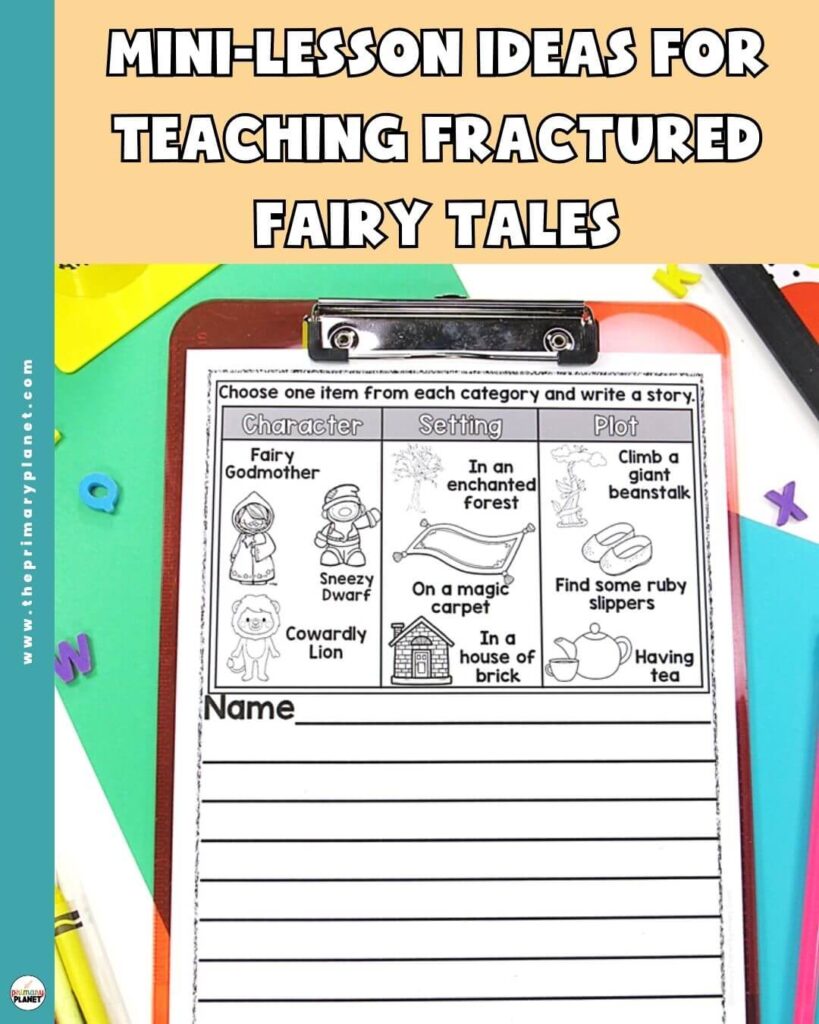
Lesson 2 – What makes it fractured? Go back to your mentor texts and ask: what did the author change? Make a list together. Changed perspective, changed character traits, changed settings, changed endings. This is where the “What if?” prompts in the resource become your best friend. There are four different “What if?” prompts included, and they are perfect for this lesson. Project one on your screen, think aloud through your own response, and watch the lightbulbs go on.
Lesson 3 – Make your choices. This is where the picture prompts really shine. Each of the five fractured fairy tale prompts gives students a choice of characters, settings, and plot options. They can mix and match or choose all of them. For reluctant writers, having those visual choices right in front of them is a game changer. No more blank page panic. They are looking at pictures and making decisions, which feels a lot less scary than starting from nothing.
Lesson 4 – Plan before you write. Use a Venn diagram to help students see how their fractured version differs from the original fairy tale. It is a simple planning move that makes their writing so much stronger.
Lesson 5 – Draft, revise, add details. Focus on one craft move at a time. Dialogue is a great one for fairy tales. So are sensory details. Use the included editing checklist to guide revision. It keeps the process manageable and gives students ownership over their own editing. The resource includes writing paper with primary lines, plain lines, and a box for drawing—so you can choose the format that fits your writers best.
The “Would You Rather?” prompts and the Newspaper prompts are fantastic for opinion and descriptive writing practice once students have their narrative feet under them. And the Challenge prompts—where students write a story using all of the given words—are perfect for your fast finishers or anyone ready to push a little further.
Okie dokie, that is a lot of good stuff packed into one resource. The word banks and visual supports also make it a great option for your ELL students. Everybody gets an entry point. Everybody gets to write.
If you have younger students or need something perfect for your writing center, check out my Fairy Tale Picture Writing Prompts for Younger Learners and my Fairy Tale Sticker Stories. Sticker stories are one of my all-time favorite writing center tools. Kids place stickers to build their scene and then write about it. Easy peasy, and the engagement is through the roof.
End-of-Unit Fairy Tale Celebration Ideas
This is the part I love most. When students have worked hard on a writing unit, they deserve a real celebration—not just a bulletin board.
Host an Author’s Chair day where students read their fractured fairy tale aloud to the class. Make it an event. Let kids decorate a special chair. Have your students dress up as one of the characters from their fractured fairy tale. Invite another class to be the audience. Go crazy and invite the parents!
Create a class fairy tale book. Bind all the stories together, make copies, and send one home with each student. They will treasure it.
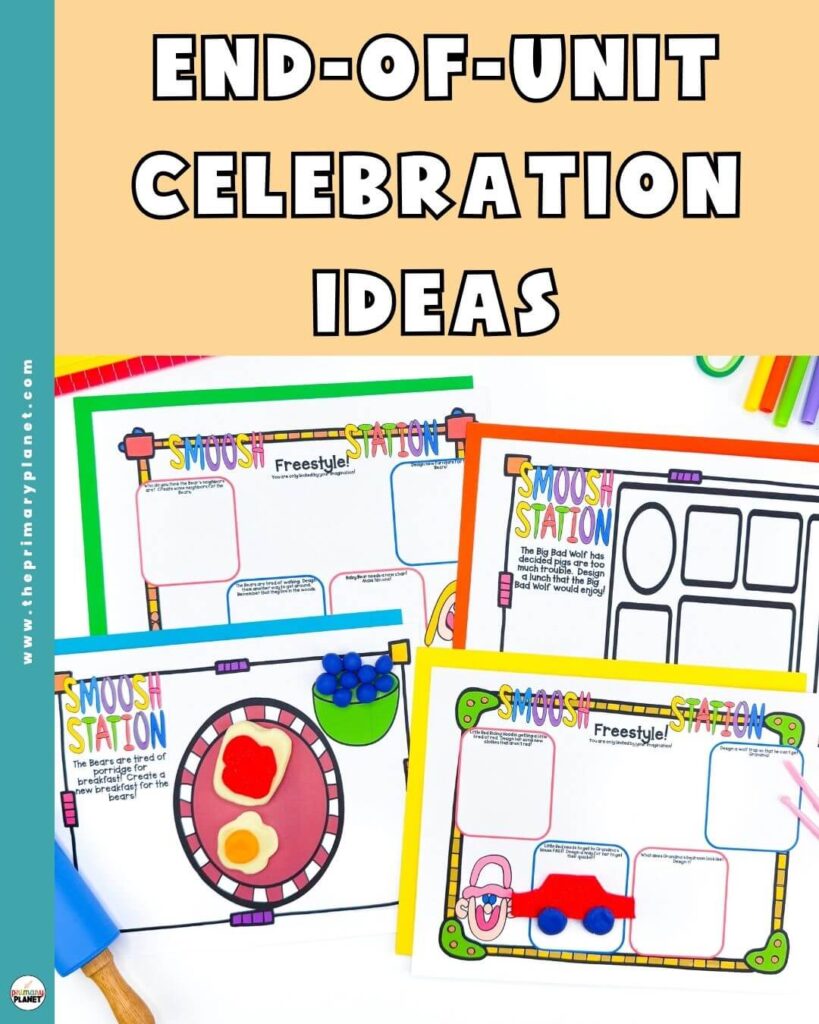
Wrap up the unit with some fairy tale STEM fun. My Fairy Tale STEM Activities with Play-Dough are a perfect culminating activity. Students use play-dough to build structures and solve challenges connected to the fairy tale stories they know. It is hands-on, engaging, and a great change of pace after all that writing work.
Fairy tale units are one of those writing experiences that students remember. They laugh, they create, they surprise themselves with what they can write. That is teaching happy right there.
Pin the image below to save this post for later!
Follow me on TpT! New products are 50% off for the first 24 hours after posting—you don’t want to miss that. Click here to follow my store!
Happy Teaching,